

Electric meters are essential devices for measuring and monitoring electrical energy in residential, commercial, and industrial applications. With the development of smart grids and intelligent energy management systems, modern electric meters require increasingly reliable electronic components to support accurate measurement, stable power conversion, signal processing, and protection. Among these components, inductors play an important role in managing current, filtering electrical noise, and supporting efficient power circuits.
A Toroidal Inductor is particularly useful in electric meter applications because its ring-shaped magnetic core provides an efficient magnetic path while helping reduce electromagnetic interference. Depending on the circuit design, different types of inductors can be used for current sensing, filtering, power conversion, and noise suppression.
Understanding Inductor Inductance, choosing an appropriate Power Inductor, and selecting a suitable Toroidal Power Inductor are important steps when designing reliable electric meter systems. These components can contribute to stable operation and accurate electrical measurement while helping protect sensitive electronic circuits from unwanted interference.
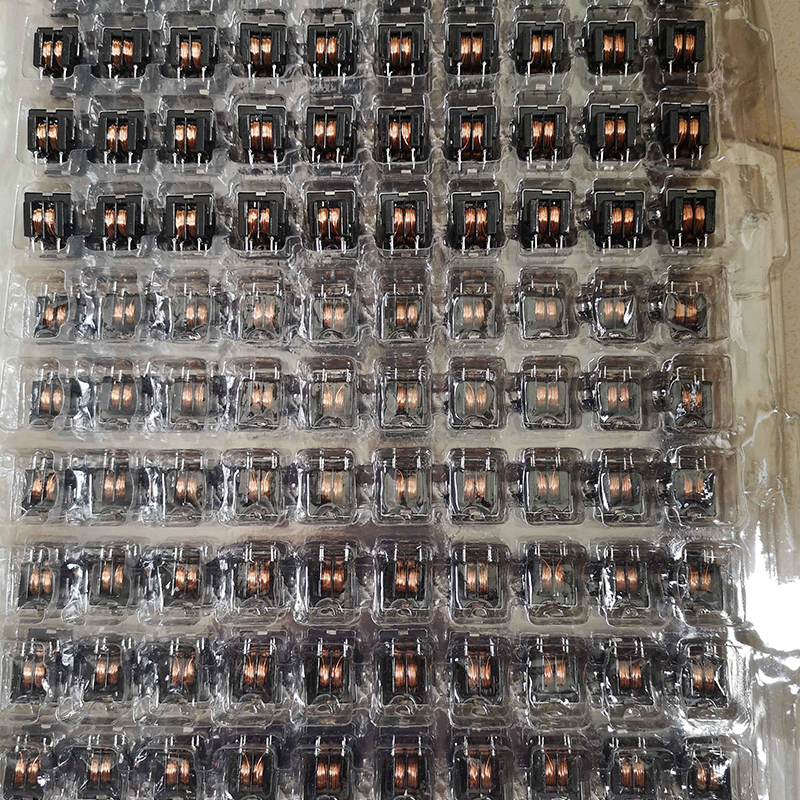
How Are Toroidal Inductors Used in Electric Meters?
A Toroidal Inductor is an inductor constructed around a toroidal, or ring-shaped, magnetic core. The winding is typically distributed around the core, creating a closed magnetic path. This structure can provide several advantages for electronic equipment where space, electromagnetic compatibility, and electrical performance are important.
Electric meters contain multiple electronic circuits that work together to measure voltage and current, process signals, communicate data, and manage power. Inductors can be integrated into these circuits for several purposes.
One common application is electromagnetic interference filtering. Electric meters may operate in environments containing switching power supplies, motors, converters, communication equipment, and other electrical devices. These systems can generate unwanted high-frequency electrical noise. A properly selected toroidal inductor can work as part of a filtering circuit to reduce unwanted noise and help maintain cleaner electrical signals.
Toroidal construction can also help contain the magnetic field within the core. Because the magnetic flux follows a relatively closed path, a Toroidal Inductor can be useful in applications where reduced electromagnetic radiation and improved electromagnetic compatibility are desired.
Another application is current-related signal processing. Depending on the meter architecture, inductive components may be incorporated into circuits that condition or filter current signals before they reach measurement electronics. Stable filtering can help reduce unwanted disturbances while allowing the desired electrical signal to pass through the circuit.
Power management is another important area. Smart electric meters often contain microcontrollers, communication modules, displays, sensors, and other electronic components. These circuits require stable power supplies. Inductors used in DC-DC converters and switching power supplies can help store and transfer energy while supporting voltage regulation.
For these reasons, toroidal inductors can be found in different sections of electric meter electronics, including filtering circuits, power supply circuits, signal conditioning circuits, and electromagnetic interference suppression circuits.
Why Is Inductor Inductance Important for Electric Meter Applications?
Inductor Inductance is one of the most important electrical characteristics to consider when selecting an inductor. Inductance determines how strongly an inductor responds to changes in current and influences the behavior of the surrounding circuit.
In an electric meter, the required inductance value depends on the specific circuit and its operating conditions. A filtering circuit, for example, may require a different inductance value from a switching power supply. Selecting an inappropriate value can affect filtering performance, power conversion efficiency, voltage stability, or circuit response.
Inductors are also affected by parameters such as rated current, saturation current, DC resistance, operating frequency, core material, temperature characteristics, and physical dimensions. These factors should be evaluated together rather than selecting a component based only on inductance.
For example, when a Power Inductor is used in an electric meter’s switching power supply, it may repeatedly store and release energy as part of the power conversion process. The component must therefore withstand the expected current without excessive heating or magnetic saturation.
Core selection is particularly important. Different magnetic materials have different characteristics at different frequencies and current levels. A suitable core can help achieve the desired inductance and energy-storage characteristics while maintaining acceptable losses.
DC resistance is another consideration. A lower winding resistance can reduce power loss and heat generation. Excessive heat inside a compact electric meter enclosure may affect component reliability and the long-term stability of the electronic system.
Temperature performance is also important because electric meters may be installed in environments with changing temperatures. A well-designed inductor should maintain suitable electrical characteristics across the expected operating temperature range.
When selecting Inductor Inductance for an electric meter, engineers may therefore consider the circuit topology, operating frequency, expected current, voltage conditions, filtering requirements, temperature range, physical size, and required reliability.
This comprehensive approach helps ensure that the selected component works effectively with other electronic parts in the meter rather than treating inductance as an isolated specification.
How Does a Toroidal Power Inductor Support Smart Meter Performance?
A Toroidal Power Inductor combines the characteristics of a toroidal magnetic structure with the requirements of power-related applications. This type of component can be particularly useful when an electric meter requires compact power filtering, energy storage, or electromagnetic noise suppression.
Modern smart meters typically contain more electronics than traditional mechanical meters. In addition to measuring electricity consumption, they may support wireless communication, remote data transmission, display functions, fault monitoring, and other intelligent features. These functions increase the importance of stable internal power supplies.
A Power Inductor can be an important component in a switching regulator. During operation, the inductor stores energy in its magnetic field and releases it to the circuit as required. Together with switching devices, capacitors, and control circuits, the inductor helps regulate the electrical output of the power supply.
A Toroidal Power Inductor can also be used in filtering applications. Power lines inside an electric meter may contain switching noise or other unwanted high-frequency components. The inductor can be combined with capacitors and other components to form a filtering network that reduces interference.
The toroidal structure offers another practical advantage: electromagnetic coupling can be controlled through its closed magnetic path. This can be useful in compact electronic equipment where multiple circuits are located close together.
Reliability is also a major consideration for electric meter components. Meters are often expected to operate continuously for long periods, so components need to withstand repeated electrical and thermal stress. The selected Toroidal Power Inductor should therefore match the application’s current, frequency, temperature, insulation, and mechanical requirements.
For manufacturers of electric meters and smart meters, customization can also be important. Different meter designs may require different inductance values, current ratings, dimensions, winding configurations, and mounting methods. A customized Toroidal Inductor can be designed to meet the electrical and physical requirements of a specific meter circuit.
Quality control is equally important. Manufacturers may evaluate inductance tolerance, winding resistance, current capacity, insulation performance, temperature rise, and other characteristics during production. Consistent component performance helps maintain consistency across large batches of electric meters.
Overall, Toroidal Inductor, Inductor Inductance, Power Inductor, and Toroidal Power Inductor technologies can support several important functions within modern electric meters. Their applications may include power conversion, current-related signal filtering, electromagnetic interference suppression, and power-line filtering.
As electric meters continue to evolve toward smart and connected energy-management devices, reliable passive components remain an important part of their electronic architecture. Selecting the correct inductor requires consideration of the complete circuit rather than a single specification. With appropriate inductance, current capacity, core material, winding design, thermal performance, and dimensions, inductors can help electric meter systems achieve stable operation, effective noise control, and long-term reliability.
Post time: Sep-20-2026