

Accurate current measurement is one of the most important functions in modern electricity meters. Whether used in traditional energy meters, smart meters, sub-metering systems, or power monitoring equipment, the magnetic core inside a current transformer plays an important role in transferring magnetic flux and supporting reliable current measurement.
Among the different core designs available for metering applications, Split Core, Transformer Core, Amorphous Transformer Core, Current Transformer Core, and C Shape Iron Core are commonly considered for different electrical and mechanical requirements. Each design has its own characteristics related to installation, magnetic performance, size, material, and manufacturing process.
A current transformer works through electromagnetic induction. The conductor carrying the primary current creates a magnetic field, and the magnetic core concentrates this magnetic flux so that the secondary winding can generate a proportional electrical signal for measurement. The core material, geometry, winding configuration, and manufacturing accuracy can all influence the performance of the current transformer.
For electricity-meter manufacturers, choosing the correct magnetic core is therefore not simply a matter of selecting a particular shape. The core must be matched with the meter’s current range, accuracy requirements, available installation space, operating environment, and overall circuit design.
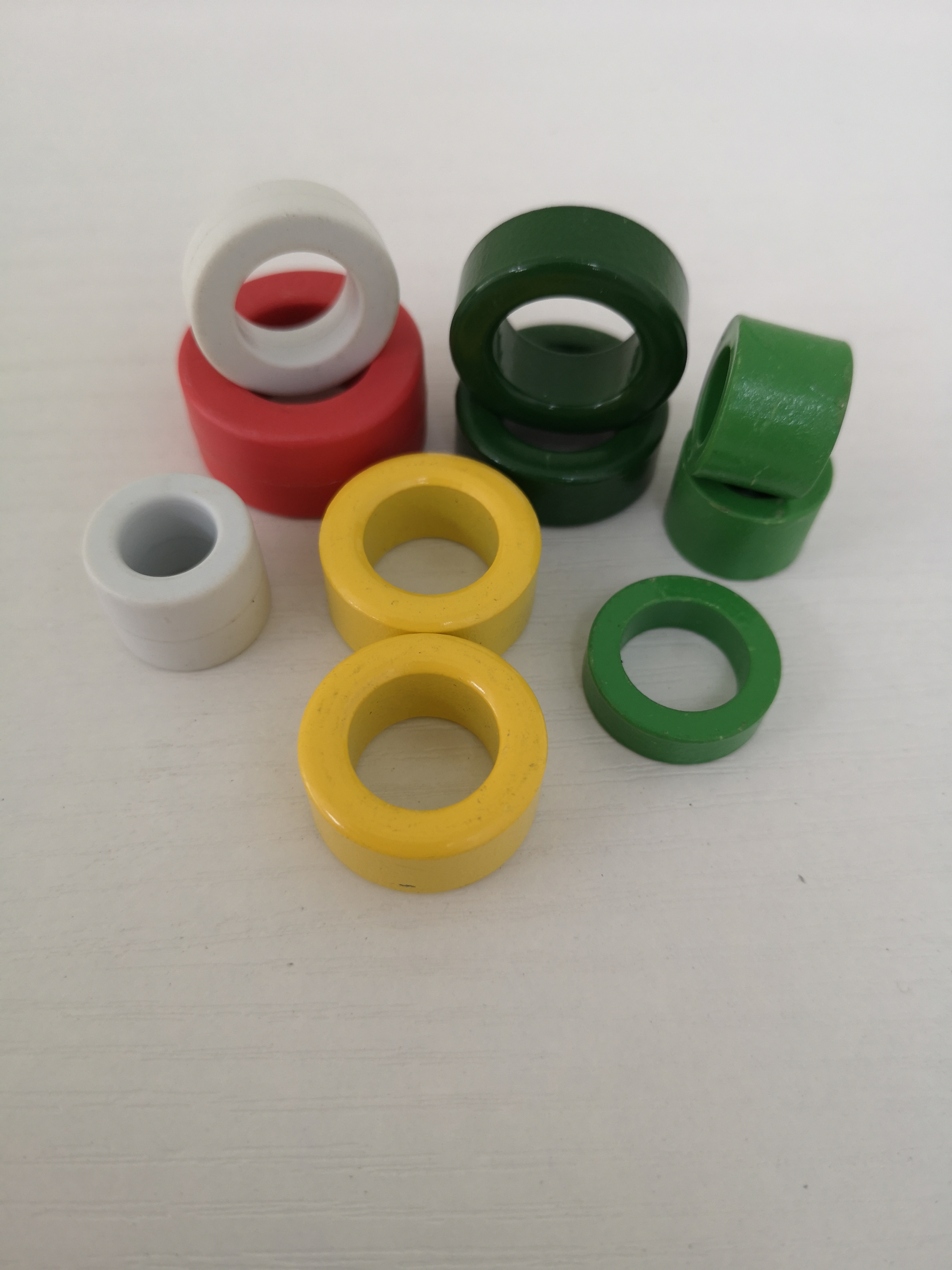
What Is a Split Core and How Is It Used in Electricity Meters?
A Split Core is a magnetic core designed with a separable structure that allows the core to open and close around an existing conductor. Unlike a conventional solid-core current transformer, the conductor does not necessarily need to be disconnected or removed before the CT can be installed. Schneider Electric explains that a split-core CT has an openable and closeable mechanical gap, allowing installation around existing busbars or cables.
This design is particularly useful for retrofit electricity-metering applications. For example, an existing electrical distribution system may already have cables installed and operating. Installing a conventional solid-core CT may require the conductor to be disconnected so that it can be passed through the center of the core. A split-core design can instead be opened, positioned around the conductor, and closed.
This makes split-core technology suitable for applications such as energy monitoring, sub-metering, power measurement, and electrical equipment monitoring. Commercial split-core CT products are available specifically for KWH meters, demand meters, sub-metering, and energy-management systems.
Advantages of Split-Core Design
The primary advantage of a Split Core is installation flexibility. It can be installed around an existing conductor without requiring the same level of disassembly associated with a solid-core CT.
For electricity-meter manufacturers and system integrators, this can be especially useful when designing retrofit metering equipment. Existing electrical panels may have limited space, and disconnecting cables can be inconvenient or impractical.
However, the split structure also introduces an important design consideration: the contact surfaces between the two core sections must align properly. Any unnecessary air gap can affect the magnetic path and potentially influence measurement performance. High-quality split-core CTs therefore use precise mechanical alignment and secure closing mechanisms to minimize this effect.
The size of the core opening is also important. It must accommodate the intended cable or busbar while maintaining suitable magnetic performance. A core that is too small cannot be installed around the conductor, while an unnecessarily large core may increase the overall size and cost of the CT.
Split Core for Smart Metering
As electricity networks increasingly use smart meters and distributed monitoring systems, compact current-sensing components can support more flexible measurement architectures.
A split-core current transformer can provide an AC current signal to the meter or monitoring circuit. Some commercially available split-core CTs are designed specifically for power meters and energy sub-metering systems.
For these applications, manufacturers need to consider current ratio, phase error, linearity, core dimensions, insulation, terminal configuration, and environmental conditions. The core should be designed to provide stable magnetic characteristics across the intended current range.

How Does a Transformer Core Affect Current Measurement?
A Transformer Core provides the magnetic path required for transformer operation. In an electricity meter, a current transformer uses the core to concentrate magnetic flux generated by the primary conductor and transfer it efficiently to the secondary winding.
The core is therefore a fundamental part of the current transformer rather than simply a mechanical support for the winding.
The magnetic properties of the material can have a direct relationship with the measurement characteristics of the CT. Permeability, saturation behavior, hysteresis, core loss, and magnetic linearity are among the factors that engineers may evaluate when selecting a core material.
Current Transformer Core Design
A Current Transformer Core is specifically designed to support current sensing and measurement. The primary conductor may pass through the center of the core, while a secondary winding is positioned around the magnetic circuit.
When alternating current flows through the primary conductor, it generates a changing magnetic field. The core concentrates this field and allows the secondary winding to produce a corresponding current or voltage signal. The meter’s electronic circuit can then process this signal to determine the current or energy-related parameters.
The accuracy of the final measurement depends on more than the core alone. Turns ratio, winding arrangement, burden, temperature, frequency, magnetic properties, and manufacturing tolerances can all influence CT performance.
For electricity-meter applications, the core should therefore be designed according to the required measurement class and operating current range.
Why Core Material Matters
Traditional transformer and CT cores can be manufactured from materials such as silicon steel, while specialized applications may use amorphous or nanocrystalline magnetic materials.
An Amorphous Transformer Core is manufactured using an amorphous metal alloy with a non-crystalline structure. Amorphous magnetic materials can provide high magnetic permeability and low coercivity, making them attractive for applications where magnetic efficiency and measurement performance are important. Research and patent literature also identifies amorphous alloys among the materials used for current-transformer cores in power meters.
The thin-ribbon structure of amorphous materials can also help reduce eddy-current-related losses under alternating magnetic excitation. However, the actual suitability of an amorphous core depends on the specific alloy, heat treatment, core geometry, operating frequency, flux density, and CT design.
For high-accuracy electricity-meter applications, engineers may evaluate amorphous materials when they need specific magnetic characteristics. The selection should always be based on measured performance and the requirements of the final meter rather than material type alone.
C Shape Iron Core
A C Shape Iron Core is another useful core configuration for transformer and magnetic component manufacturing. Its open-sided geometry can simplify winding, assembly, or integration into particular electrical structures.
C-shaped magnetic cores can be manufactured from different magnetic materials depending on the intended application. For meter components, the core dimensions, magnetic path length, air-gap characteristics, material thickness, and assembly method should be carefully controlled.
The geometry is especially important because the magnetic path determines how efficiently flux can circulate through the core. If the core contains an unintended or excessive air gap, magnetic reluctance can increase and affect the relationship between primary current and secondary output.
For this reason, precision manufacturing is important when producing C-shaped cores for measurement applications.
How to Choose the Right Magnetic Core for an Electricity Meter?
Selecting the right core requires consideration of electrical performance, mechanical design, installation requirements, and production conditions. Different electricity meters may require different core configurations.
1. Define the Current Measurement Range
The first step is to determine the minimum and maximum current that the CT needs to measure.
A meter designed for residential applications may have significantly different current requirements from a commercial or industrial sub-metering system. The core must maintain appropriate magnetic performance across the intended measurement range.
Core saturation is also an important consideration, especially at higher current levels. The selected magnetic material and core dimensions should be evaluated against the expected operating conditions.
2. Select the Appropriate Core Material
For general applications, silicon-steel-based cores may provide a practical solution. For specialized metering applications, an Amorphous Transformer Core or other high-permeability material may be considered.
The choice should take into account permeability, saturation flux density, hysteresis, core loss, temperature stability, frequency, and cost.
Patent literature concerning power-meter current transformers demonstrates that different magnetic materials can produce different measurement characteristics, particularly regarding ratio error, phase difference, and linearity.
3. Choose Between Solid and Split Core
If the conductor can be disconnected during installation or the CT is integrated during initial electrical-system assembly, a solid core may be suitable.
If the product is intended for retrofit installation, a Split Core can offer greater installation flexibility because it can be opened around an existing conductor. Schneider Electric specifically identifies this as the key distinction between solid-core and split-core current transformers.
4. Check Core Dimensions
The inner opening must be large enough for the cable or busbar, while the external dimensions need to fit inside the electricity meter or electrical enclosure.
For compact smart meters, reducing the size of the magnetic component can be important. However, miniaturization should not compromise the required magnetic performance or insulation distances.
5. Evaluate Accuracy Requirements
Electricity-meter applications can require relatively precise current measurement. Therefore, manufacturers should evaluate ratio error, phase error, linearity, excitation characteristics, and temperature effects.
For split-core designs, the mechanical closing accuracy is also important because the two core sections must form a consistent magnetic circuit after installation.
6. Consider Frequency and Operating Environment
Most electricity-meter current transformers are designed for AC measurement at the relevant power-system frequency. The core material should be compatible with the operating frequency and expected magnetic flux.
Temperature, humidity, vibration, and installation conditions should also be considered. A core that performs well under laboratory conditions must still maintain suitable characteristics under the actual operating environment.
7. Ensure Consistent Manufacturing
For high-volume electricity-meter production, consistency is essential. Core dimensions, material thickness, magnetic properties, winding position, assembly accuracy, and surface condition should be controlled throughout production.
For split-core products, the matching of the two core halves is particularly important. For C-shaped or other specialized core geometries, dimensional tolerances must also be controlled carefully.
Overall, Split Core and Current Transformer Core technologies provide flexible solutions for current measurement in electricity meters and energy-monitoring systems. A well-designed Transformer Core creates the magnetic path required for accurate current sensing, while specialized materials such as an Amorphous Transformer Core can be considered when specific magnetic performance is required.
A C Shape Iron Core can provide an alternative geometry for applications where assembly, winding, or mechanical integration requires a different configuration. For smart-meter and sub-metering applications, the final choice should be based on current range, accuracy, core material, dimensions, installation method, environmental conditions, and manufacturing requirements.
By carefully matching the magnetic core design to the electrical meter’s measurement circuit, manufacturers can develop current-transformer components that provide stable magnetic performance, reliable installation, and consistent operation over the intended service life.
Post time: Sep-23-2026