

Electric meters are essential devices for measuring and monitoring electricity consumption in residential, commercial, and industrial environments. As smart metering technology continues to develop, the display component has become an important part of the overall meter design. Users need to clearly read electricity consumption, voltage, current, power, meter status, tariff information, and other important data. For these requirements, LCD technology provides an efficient combination of low power consumption, excellent readability, long service life, and flexible customization.
A Segment Lcd is particularly suitable for electric meters because it is designed to display numbers, letters, units, symbols, and simple status indicators. Unlike graphical displays that are designed for complex images and interfaces, segment LCD technology focuses on displaying essential information clearly and efficiently. This makes it a practical choice for electricity meters that need to operate continuously for long periods.
The term Lcd Segment generally refers to the individual display elements used to form numbers, characters, and symbols. By controlling different segments, an electric meter can display values such as kilowatt-hours, voltage, current, power factor, frequency, and other measurement information.
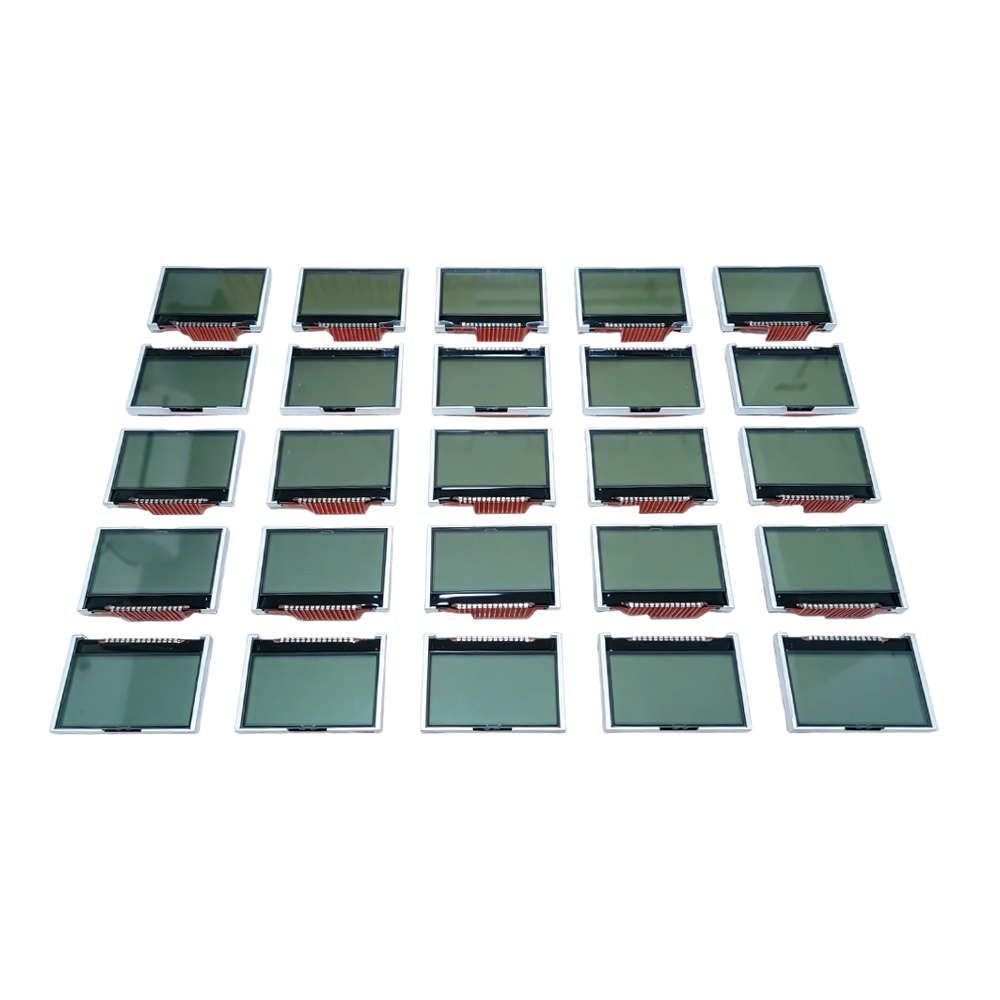
For modern electricity meters that require compact and integrated designs, a Cog Lcd Display Module can provide additional advantages. COG, or Chip-on-Glass technology, integrates the LCD driver IC directly onto the glass substrate. This helps reduce the size of the display assembly and makes it suitable for compact electronic meter designs.
Why Segment LCD Is Suitable for Electric Meters
Electric meters have specific display requirements that are different from those of smartphones, televisions, or other consumer electronics. A meter does not normally need high-resolution graphics. Instead, it needs to provide clear and stable numerical information while consuming as little power as possible.
This is one of the major advantages of a Segment Lcd. The display can be customized with the exact digits, characters, units, and symbols required by an electricity meter. For example, a residential electricity meter may need to display energy consumption in kWh, voltage in V, current in A, frequency in Hz, and various operating or warning indicators.
The simple structure of segment LCD technology makes it particularly appropriate for this type of application. Since the display is designed around predefined segments, it can provide clear information without the unnecessary complexity of a full graphical display.
Low power consumption is another important advantage. Many electric meters are designed to operate continuously, and some applications place strict requirements on overall energy consumption. A low-power Lcd Segment can help reduce the amount of energy required by the display itself.
This characteristic is especially valuable for electricity meters that must remain operational 24 hours a day. A display that can provide readable information without requiring significant power can contribute to the overall efficiency of the meter.
Readability is equally important. An electricity meter may be installed in homes, commercial buildings, factories, utility cabinets, or outdoor meter boxes. Users should be able to identify the displayed values quickly and accurately. A properly designed Segment Lcd can provide high contrast between the active segments and the background, helping users read important information.
The display can also incorporate different symbols for meter status. For example, an electric meter may need indicators for communication status, battery condition, alarm conditions, tariff periods, measurement units, or other operational information. These indicators can be integrated directly into a customized segment display.
Customization is one of the key benefits of LCD segment technology. Instead of selecting a standard display with unnecessary elements, an electric meter manufacturer can design the LCD according to the actual information requirements of the meter. The number of digits, decimal points, icons, unit indicators, and display areas can all be considered during the design stage.
For utility meters, consistent display performance is particularly important because meter readings may need to be checked repeatedly over a long period. A well-designed LCD should maintain stable optical performance throughout its expected operating life.
The viewing angle should also be considered. Depending on the installation environment, users may view the meter from different directions. A suitable Lcd Segment can be designed with appropriate viewing characteristics to improve readability in practical installation conditions.
COG LCD Display Modules for Compact and Smart Electricity Meters
As electricity meters become more compact and intelligent, manufacturers are increasingly interested in display solutions that occupy less internal space. This is where a Cog Lcd Display Module can offer important advantages.
COG means Chip-on-Glass, a technology in which the LCD driver IC is mounted directly onto the glass substrate. Compared with display structures that require a separate driver circuit arrangement, COG technology can help reduce the overall thickness and footprint of the display assembly.
For electric meter manufacturers, space efficiency can be important. The internal structure of a modern meter may contain measurement circuits, communication components, power management systems, control electronics, and other components. Reducing the space required by the display can give designers greater flexibility when arranging the internal components.
A Cog Lcd Display Module can also be customized for different electricity meter interfaces. Depending on the product requirements, the display can contain numerical digits, decimal points, measurement units, communication indicators, alarm symbols, tariff indicators, and other icons.
For example, a smart electricity meter may need to show accumulated energy consumption while also providing information about different tariff periods. It may also display communication status or warning information. A customized segment layout allows manufacturers to incorporate these functions into a single display interface.
The integration of the driver IC can also help simplify certain aspects of the display structure. However, electrical compatibility remains an important consideration. The LCD voltage, driving method, duty cycle, bias, controller requirements, connector configuration, and other parameters need to correspond with the meter’s electronic system.
When developing a Cog Lcd Display Module for an electric meter, engineers should therefore consider both the LCD itself and the electronic circuit that controls it. Early communication between the display supplier and meter manufacturer can help establish the appropriate electrical and mechanical specifications.
Environmental conditions are another important factor in electricity meter applications. Depending on where the meter is installed, it may be exposed to temperature fluctuations, humidity, dust, vibration, or other environmental factors. Outdoor or semi-outdoor meters may have more demanding operating conditions than indoor meters.
For this reason, the LCD should be selected according to the expected operating temperature and environmental requirements of the final product. The glass, polarizer, driver IC, sealing structure, and other display components should be evaluated as part of the complete display solution.
Backlight requirements may also vary. Some electricity meters are designed for reflective viewing under ambient light, while others may require a backlight for reading in low-light environments. The appropriate display configuration depends on the meter’s installation location and user requirements.
The combination of segment display technology and COG integration can therefore provide a practical solution for compact electricity meters. A Cog Lcd Display Module can deliver clear numerical information while helping manufacturers optimize the internal structure of the meter.
How to Select the Right LCD Segment for Electricity Meter Applications
Selecting the appropriate Lcd Segment for an electricity meter requires careful consideration of display content, mechanical dimensions, electrical characteristics, optical performance, and operating environment.
The first step is to define exactly what the meter needs to display. Common information can include total energy consumption, voltage, current, frequency, power, power factor, tariff information, meter status, alarm indicators, and communication status.
Once the required information is determined, the segment layout can be designed accordingly. The number and size of digits should be selected according to the expected measurement range. Decimal points, unit symbols, arrows, icons, and status indicators can then be incorporated into the layout.
The physical dimensions of the display are also important. Engineers should determine the overall LCD size, viewing area, glass thickness, mounting position, and connection method. These specifications should correspond with the meter housing and internal PCB design.
Electrical parameters must also be carefully evaluated. A Segment Lcd needs to operate correctly with the meter’s driving circuit. Important parameters can include operating voltage, duty ratio, bias ratio, drive waveform, pin configuration, and controller compatibility.
Optical performance should not be overlooked. Contrast, viewing angle, polarizer selection, reflective characteristics, and possible backlight requirements can all influence how easily users can read the meter.
For electricity meters installed outdoors or in locations with changing temperatures, temperature performance is particularly important. The LCD should maintain appropriate visual performance across the expected operating range.
Long-term reliability is another consideration. Electricity meters are generally expected to operate for many years, so the display should be designed with durability in mind. Stable segment performance, reliable connections, appropriate materials, and suitable environmental specifications can all contribute to longer service life.
Customization can also help electricity meter manufacturers differentiate their products. A custom Lcd Segment can be designed around a specific meter interface, allowing manufacturers to include their own symbols, indicators, and information layouts.
For smart electricity meters, the combination of a customized Segment Lcd and a compact Cog Lcd Display Module can provide a practical display solution. The meter can present essential measurement information clearly while maintaining a compact internal structure.
Prototype testing is recommended before mass production. Manufacturers can evaluate the display’s contrast, viewing angle, electrical compatibility, temperature performance, mechanical fit, and overall readability under actual operating conditions.
A reliable LCD display is an important part of a high-quality electricity meter. Although it may appear to be a relatively simple component, the display directly affects how users interact with the meter and how easily measurement information can be understood.
As electricity measurement technology continues to evolve, meters are becoming more intelligent, compact, and multifunctional. However, the fundamental requirement for a clear, reliable, and low-power display remains unchanged. Segment LCD technology continues to meet these requirements effectively.
A properly designed Lcd Segment can provide accurate and easy-to-read numerical information, while a Cog Lcd Display Module can help meet the demand for compact and integrated meter designs. By carefully considering electrical specifications, display layout, optical performance, environmental conditions, and long-term reliability, manufacturers can develop LCD solutions that are well suited to modern electricity meter applications.
For electricity meter manufacturers and electronic product developers, choosing the right LCD technology at the beginning of the design process can help improve product usability and reliability. With its low power consumption, customizable segment layout, compact structure, and clear visual performance, segment LCD remains a practical display technology for electric meters and other measurement instruments.
Post time: Sep-16-2026