

Accurate current measurement is an essential part of modern electricity metering and power monitoring systems. As electricity meters become increasingly intelligent and electrical monitoring requirements continue to grow, reliable current sensing components play an important role in measuring power consumption and supporting efficient energy management. A Split Core Current Transformer is a practical solution for measuring alternating current (AC) without requiring the main conductor to be disconnected during installation.
Designed with a separable magnetic core, this type of current transformer can be opened and installed around an existing cable or busbar. It then converts the primary current into a smaller secondary current that can be processed by a meter or monitoring device. This design makes it suitable for electricity meters, smart metering systems, distribution panels, and industrial power monitoring equipment.
For electricity meter manufacturers and electrical equipment suppliers, selecting a suitable current transformer involves considering measurement range, accuracy requirements, core material, dimensions, and installation structure. As a professional sourcing option, a China Split Core Current Transformer can be customized to meet different meter designs and application requirements.
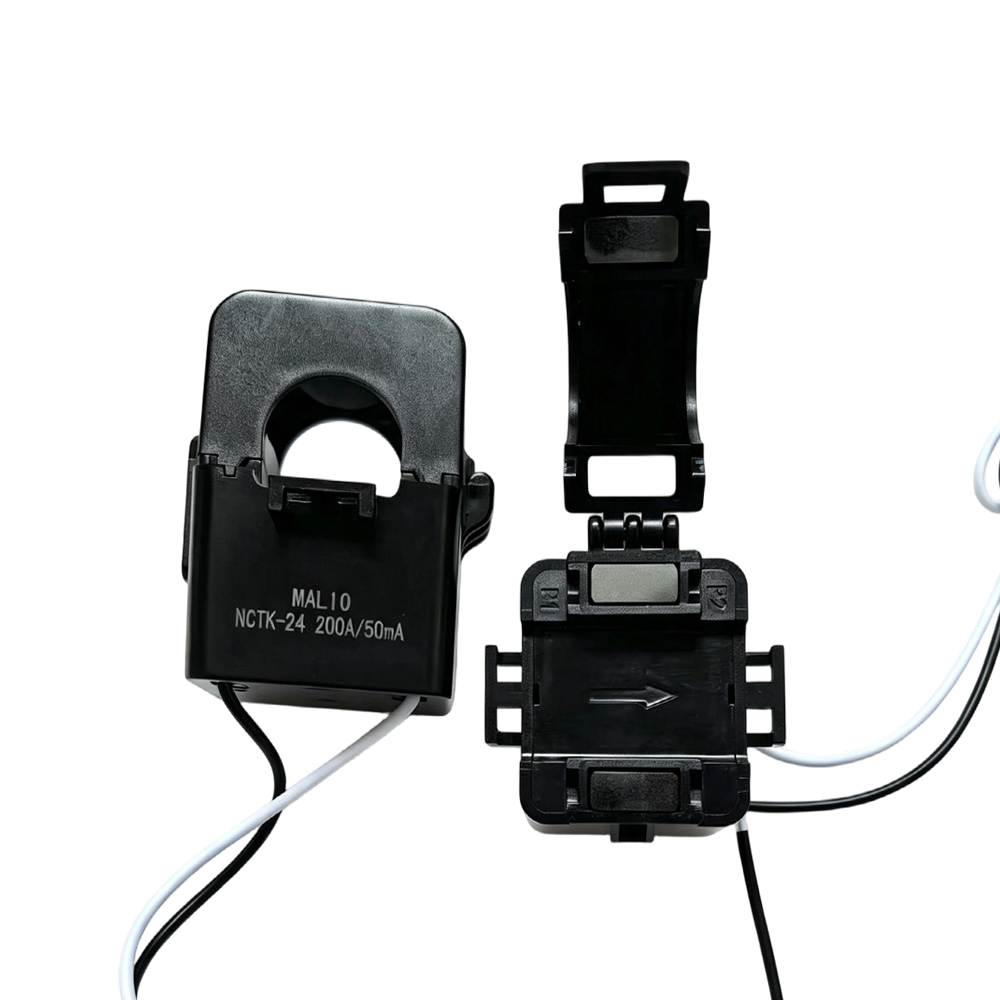
What Is a Split Core Current Transformer and How Does It Work?
A Split Core Current Transformer is an electrical measuring component designed to measure alternating current through electromagnetic induction. Unlike a traditional closed-core current transformer, its magnetic core consists of two separable sections that can be opened and closed around an existing conductor.
The primary conductor passes through the center of the transformer and acts as the primary winding, usually with one turn. The secondary winding is wound around the magnetic core. When alternating current flows through the primary conductor, it generates a changing magnetic field in the core. This magnetic field induces a proportional current in the secondary winding.
The secondary current is then supplied to a measuring instrument, electricity meter, or monitoring system. Based on the transformer’s specified current ratio, the connected equipment can calculate the primary current. This allows the system to measure larger currents while keeping the measurement signal within a suitable range for the electronic circuit.
The main components of a Split Core Current Transformer generally include:
Magnetic Core: Provides the magnetic path required for electromagnetic induction. The core material and structure influence the transformer’s performance.
Secondary Winding: Generates the output current corresponding to the primary current.
Insulating Housing: Protects internal components and provides mechanical support.
Opening and Closing Structure: Allows the transformer to be installed around an existing cable or busbar.
Output Terminals or Lead Wires: Connect the transformer to the electricity meter or external measuring equipment.
One of the main advantages of the split-core structure is installation convenience. Since the core can be opened, technicians can install the transformer without removing the existing conductor from the electrical circuit. This can simplify installation and retrofit projects, particularly in distribution cabinets and existing electrical systems.
The appropriate transformer should be selected according to the primary current range, secondary output, accuracy class, operating frequency, insulation requirements, and installation dimensions. These parameters should match the design specifications of the connected electricity meter or monitoring equipment.
Applications of Split Core Current Transformer in Smart Electricity Meters
Electricity meters need to measure electrical parameters accurately to calculate energy consumption. Current measurement is one of the key functions in this process. A Split Core Current Transformer can be used as an external current-sensing component in electricity metering systems, particularly where non-invasive installation and convenient maintenance are important.
In an electricity metering application, the primary conductor carrying the load current passes through the transformer’s magnetic core. The transformer senses the alternating magnetic field generated by the current and produces a corresponding secondary signal. This signal is transmitted to the meter’s measurement circuit, which processes it together with voltage information to calculate electrical power and energy consumption.
In smart electricity meters and related monitoring systems, current transformers can support functions such as:
Measuring AC current in electrical circuits.
Providing current signals for energy measurement.
Supporting electricity consumption monitoring.
Enabling current monitoring in distribution panels.
Assisting with electrical load analysis.
Supporting retrofit metering and power monitoring projects.
The split-core design is particularly useful when installing measurement equipment in existing electrical systems. For example, a facility may need to add current monitoring to an existing distribution cabinet without disconnecting the main cable. A split-core transformer can be opened, placed around the conductor, and secured in position according to the installation instructions.
For smart electricity meter manufacturers, the selection of a suitable current transformer depends on the meter’s measurement architecture. Different products may require different current ratios, output specifications, core sizes, and terminal arrangements. The transformer must also be compatible with the meter’s input circuit and signal processing requirements.
A China Split Core Current Transformer can be developed for different metering and monitoring applications according to customer drawings and technical specifications. Customization may involve the core dimensions, housing structure, opening mechanism, output lead configuration, and other design details.
In addition to electricity meters, split-core current transformers are commonly used in energy monitoring systems, building automation, industrial electrical panels, power distribution equipment, and commercial energy management projects. Their flexible installation structure makes them useful in applications where conventional closed-core transformers are difficult to install.
It is important to note that split-core current transformers are generally designed for AC measurement. Their suitability for a specific electricity meter depends on the meter’s circuit design, operating frequency, current range, and required measurement accuracy.
How to Choose a China Split Core Current Transformer Manufacturer
Choosing a reliable China Split Core Current Transformer manufacturer is important for electricity meter producers, electrical equipment manufacturers, and power monitoring system integrators. A suitable supplier should be able to provide products that match the customer’s electrical specifications, installation requirements, and production needs.
Before selecting a transformer, buyers should confirm several key technical parameters.
1. Primary Current and Current Ratio
The primary current rating should match the expected current range of the electrical circuit. The current ratio determines the relationship between the primary current and secondary output. It is important to select a ratio compatible with the connected electricity meter or monitoring device.
2. Accuracy Class
Measurement accuracy is a key consideration in electricity metering. Different applications require different accuracy levels. Customers should specify the required accuracy class according to the applicable meter design and measurement standards.
3. Core Material and Dimensions
The magnetic core plays an important role in transformer performance. Core material, cross-sectional area, and overall dimensions should be selected according to the current range, frequency, and accuracy requirements. The opening size must also be large enough to accommodate the intended cable or busbar.
4. Housing and Installation Structure
The housing should provide appropriate mechanical protection and support. The opening and closing structure should allow convenient installation while maintaining proper core alignment after closure. This is particularly important for retrofit applications.
5. Secondary Output and Connection Method
The secondary output may use lead wires, terminals, or other connection structures depending on the customer’s design. The output configuration must be compatible with the meter’s input circuit and installation requirements.
A professional China Split Core Current Transformer supplier should be able to evaluate these requirements and provide suitable product solutions. Customized manufacturing can help meet different electricity meter designs, distribution cabinet layouts, and electrical monitoring projects.
During product development, customers can provide drawings, samples, current ratings, current ratios, accuracy requirements, and installation dimensions. These details help determine the appropriate transformer structure and manufacturing specifications. Sample evaluation can then be used to verify dimensions, installation compatibility, and electrical performance before mass production.
As smart metering and energy management technologies continue to develop, current transformers remain important components in electrical measurement systems. With its convenient installation structure and flexible application possibilities, the Split Core Current Transformer provides a practical solution for AC current measurement in electricity meters and power monitoring equipment.
Whether you are developing a new smart electricity meter, upgrading an existing metering system, or sourcing current transformers for electrical distribution equipment, choosing the right specifications and manufacturing partner is essential. Contact us with your drawings and technical requirements to discuss customized China Split Core Current Transformer solutions for your project.
Post time: Nov-10-2026