

In modern electricity metering systems, accurate current measurement and reliable switching performance are essential for effective power monitoring and energy management. As smart meters and advanced electrical equipment continue to develop, manufacturers require precision metal components that combine stable electrical conductivity, mechanical reliability, and consistent manufacturing quality. The MOVING SHUNT TERMINAL is a specialized electrical component designed to meet these requirements by integrating a moving contact structure with a precision shunt function.
A moving shunt terminal is primarily used in magnetic latching relays installed in electricity meters and other electrical switching devices. It serves as a moving contact while incorporating a low-resistance shunt element that supports current measurement. By combining these functions in one component, the assembly can contribute to compact electrical structures and integrated circuit designs.
Manufactured from Manganin copper, this component offers controlled resistance characteristics and is suitable for applications requiring precise electrical performance. With a specified shunt resistance of 310μΩ±5% and a material thickness of 1.5mm, it is designed for customers who need consistent electrical parameters and customized structural dimensions.
Whether used in smart electricity meters, magnetic latching relays, or other related electrical products, a high-quality Moving Shunt Terminal plays an important role in supporting stable current sensing and switching operations.
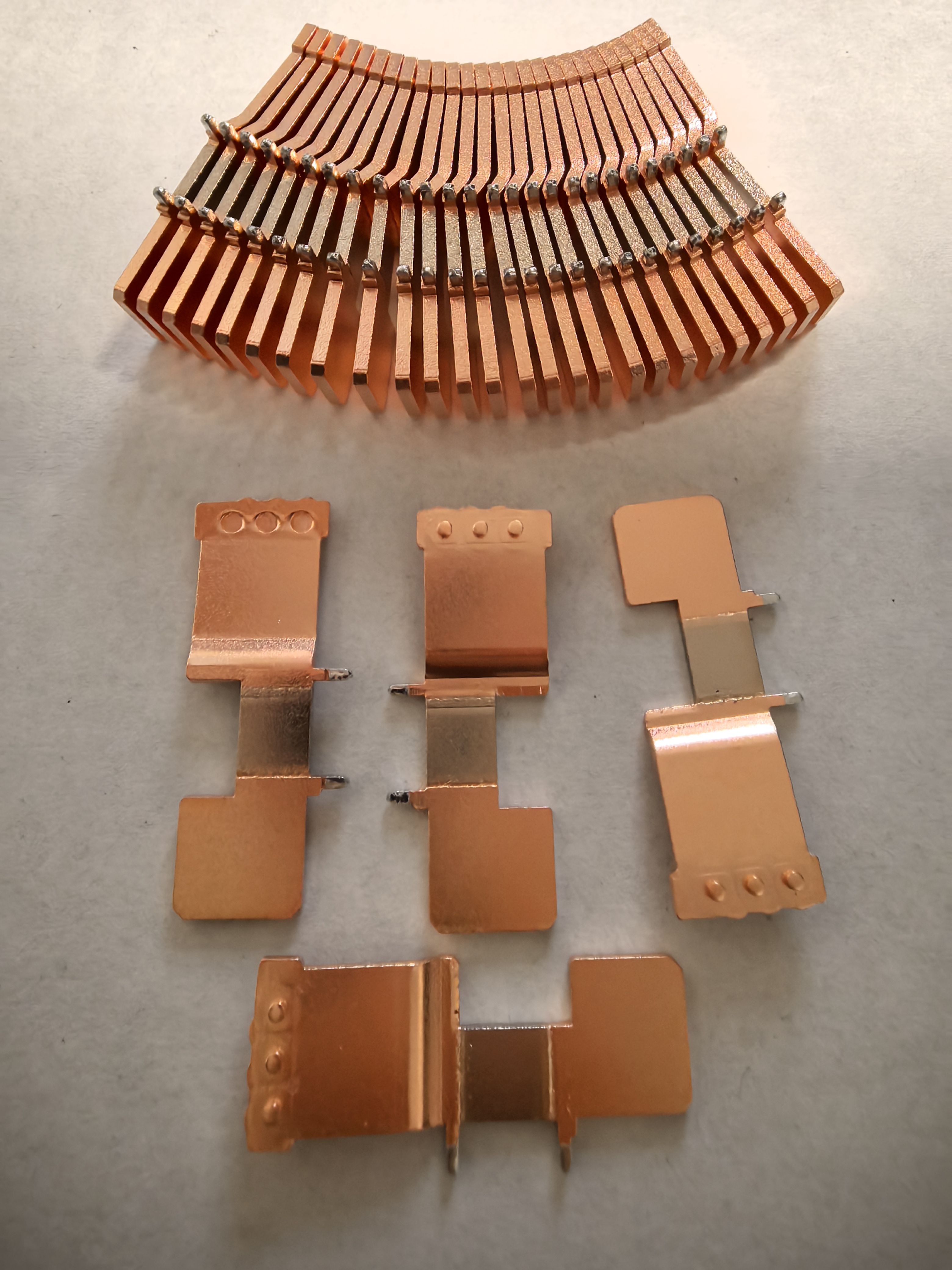
1. Product Structure, Working Principle, and Technical Specifications of Moving Shunt Terminal
The MOVING SHUNT TERMINAL is an integrated electrical contact component that combines the functions of a moving contact and a current shunt. It is mainly designed for use in magnetic latching relays, particularly those installed in electricity meters and smart energy measurement systems.
A magnetic latching relay is an electrically controlled switching device that uses magnetic force to maintain its contact position after a switching pulse. Unlike conventional relays that may require continuous coil energization to maintain their state, magnetic latching relays can retain their switching position without continuous power consumption. They are therefore widely used in smart electricity meters and power management equipment.
Inside the relay, the moving contact is responsible for establishing or interrupting the electrical connection. The integrated shunt section provides a low-resistance current path that can be used as part of the current measurement arrangement. This combination helps manufacturers integrate switching and current-sensing functions into a compact component assembly.
The resistance value is particularly important for applications involving electrical current measurement. This product features a specified Shunt Value of 310μΩ±5%, providing a defined low-resistance parameter for the corresponding circuit design. When current passes through the shunt element, a small voltage drop is generated across the resistance. This voltage signal can be used by the associated measurement circuit to determine current according to the system’s calibration and measurement configuration.
The material is Manganin copper, a copper-based resistance alloy commonly used in precision electrical resistance applications. Manganin is valued for its relatively stable resistance characteristics and suitability for low-resistance measurement components. Its electrical and thermal properties make it useful in applications where consistent shunt performance is required.
The product has a specified thickness of 1.5mm, providing a structural reference for component design and manufacturing. Other dimensions, including overall length, width, contact geometry, mounting positions, and bending angles, can be customized according to customer drawings and technical requirements.
Key product specifications include:
Product Name: MOVING SHUNT TERMINAL
Product Type: Moving Contact with Integrated Shunt Function
Application: Magnetic Latching Relays and Electricity Meters
Shunt Value: 310μΩ±5%
Material: Manganin Copper
Thickness: 1.5mm
Manufacturing: WEDM Sample Machining and Custom Mold Production
Customization: Available According to Customer Drawings
These specifications provide a reference for product selection and electrical design. For different relay models and electricity meter structures, customers can provide detailed drawings to determine the appropriate geometry, dimensions, and connection configuration.
2. Applications of Moving Shunt Terminal in Smart Electricity Meters and Electrical Equipment
One of the primary applications of the MOVING SHUNT TERMINAL is in smart electricity meters. Modern electricity meters require reliable components to support energy measurement, current monitoring, and circuit switching. The moving shunt terminal is designed to work as part of the magnetic latching relay assembly, helping combine electrical switching and low-resistance current sensing functions.
In smart electricity meters, accurate current measurement is essential for calculating electricity consumption. The shunt element provides a defined low-resistance path through which current flows. The resulting voltage drop can be detected by an appropriate measurement circuit and converted into current information.
The specified 310μΩ±5% resistance value provides an important design parameter for the meter’s electrical measurement system. The actual measurement accuracy depends not only on the shunt component but also on the complete circuit design, calibration, temperature characteristics, connection resistance, and signal-processing system.
Another important application is relay switching. The moving contact section is designed to participate in the opening and closing operations of a magnetic latching relay. When the relay receives the corresponding control signal, its internal magnetic mechanism changes the contact position, allowing the circuit to be connected or disconnected.
The integration of the shunt function into the moving contact assembly can help support compact component arrangements and reduce the need for separate structural elements in suitable designs. This is particularly relevant for electricity meter manufacturers seeking to optimize internal layouts and improve assembly efficiency.
Beyond smart electricity meters, Moving Shunt Terminals may also be adapted for other electrical products requiring integrated contact and shunt structures. Potential applications include specialized power monitoring equipment, electrical control assemblies, current measurement devices, and related relay systems, depending on the electrical and mechanical requirements.
For manufacturers of smart meters, component consistency is particularly important. Variations in shunt resistance, material thickness, contact geometry, or connection dimensions may influence the performance of the final electrical assembly. Therefore, selecting a manufacturer capable of controlling material specifications and production tolerances is essential.
The following factors should be considered when evaluating a moving shunt terminal for electrical applications:
Electrical resistance: The specified resistance must match the requirements of the measurement circuit. For this product, the nominal shunt value is 310μΩ±5%.
Material characteristics: Manganin copper provides the resistance properties required by the component design. Material consistency is important for maintaining stable electrical parameters.
Mechanical structure: The moving contact geometry must match the internal structure of the magnetic latching relay, including its mounting points and movement requirements.
Contact performance: Contact surfaces and connection areas should be manufactured according to the customer’s technical requirements to support reliable switching operations.
Dimensional accuracy: Thickness, width, length, bending positions, and other critical dimensions should be controlled to ensure compatibility with the customer’s assembly.
By considering these factors, electricity meter manufacturers and relay producers can select a suitable moving shunt terminal for their specific product designs.
3. Customized Manufacturing, WEDM Sample Production, and Mold Development
Different electricity meter manufacturers and relay suppliers may use different internal structures and technical specifications. Therefore, a standardized moving shunt terminal may not always meet every customer’s requirements. Customized manufacturing is an important part of providing suitable electrical components for different relay models and smart meter designs.
Our MOVING SHUNT TERMINAL supports customization according to customer drawings. Customers can provide 2D engineering drawings, 3D models, physical samples, or detailed technical specifications. Based on the supplied information, the product structure and manufacturing process can be evaluated to determine a suitable production solution.
For small quantities and prototype development, we support sample production using Wire Electrical Discharge Machining (WEDM). WEDM is a precision machining process that uses controlled electrical discharges to cut conductive materials along a programmed path. It is suitable for producing customized metal profiles and complex geometries without conventional cutting forces.
This manufacturing method is particularly useful during the early stages of product development. Customers can obtain a small number of samples for dimensional verification, assembly testing, and preliminary electrical evaluation before proceeding to mass production.
For example, when developing a new magnetic latching relay for a smart electricity meter, the customer may need to verify the moving contact shape, installation dimensions, and connection positions. WEDM machining allows the initial samples to be produced according to the drawing, helping engineers evaluate the design before investing in formal tooling.
For larger production quantities, formal mold development and stamping production are generally recommended. After confirming the product drawings, material specifications, and sample requirements, a dedicated production mold can be designed and manufactured.
Compared with producing every component through individual machining operations, mold-based manufacturing is more suitable for stable, repeatable mass production. It can improve production efficiency, maintain dimensional consistency, and support larger order quantities.
The customized manufacturing process generally includes the following stages:
Drawing Review: Evaluate customer drawings, dimensions, tolerances, material specifications, and shunt resistance requirements.
Sample Development: Produce small quantities through WEDM machining for initial design verification.
Sample Testing: Check dimensions, material thickness, resistance value, and assembly compatibility according to agreed specifications.
Mold Development: Design and manufacture dedicated tooling after the sample and technical requirements are confirmed.
Mass Production: Manufacture components through the established production process with controlled specifications.
Quality Inspection: Inspect product dimensions, material consistency, surface condition, and electrical resistance according to the agreed quality standards.
Throughout the manufacturing process, particular attention should be paid to the shunt resistance value, material selection, and critical structural dimensions. For products used in electricity meters, electrical consistency is an important consideration because the component forms part of the overall current measurement system.
We understand that different customers have different production requirements. Whether you need a small quantity of prototype samples or large-volume production for commercial electricity meter manufacturing, customized solutions can be developed according to your drawings and technical specifications.
In conclusion, the MOVING SHUNT TERMINAL is a specialized component combining moving contact and low-resistance shunt functions, primarily designed for magnetic latching relays used in smart electricity meters. With Manganin copper material, a 310μΩ±5% shunt value, and a 1.5mm thickness, it provides a defined technical basis for customized electrical applications. Supported by WEDM sample machining and formal mold development for mass production, this product offers flexible manufacturing options for electricity meter manufacturers, relay suppliers, and electrical equipment producers seeking precision-engineered components.
Post time: Nov-06-2026