

Accurate current measurement is one of the most important functions of a modern electric meter. Whether used in residential energy meters, commercial power monitoring systems, or industrial electricity measurement equipment, the current sensing component directly affects the accuracy and reliability of the entire metering system. As electricity monitoring becomes increasingly intelligent and precise, Hall effect current sensing technology has become an attractive solution for measuring electrical current while maintaining electrical isolation.
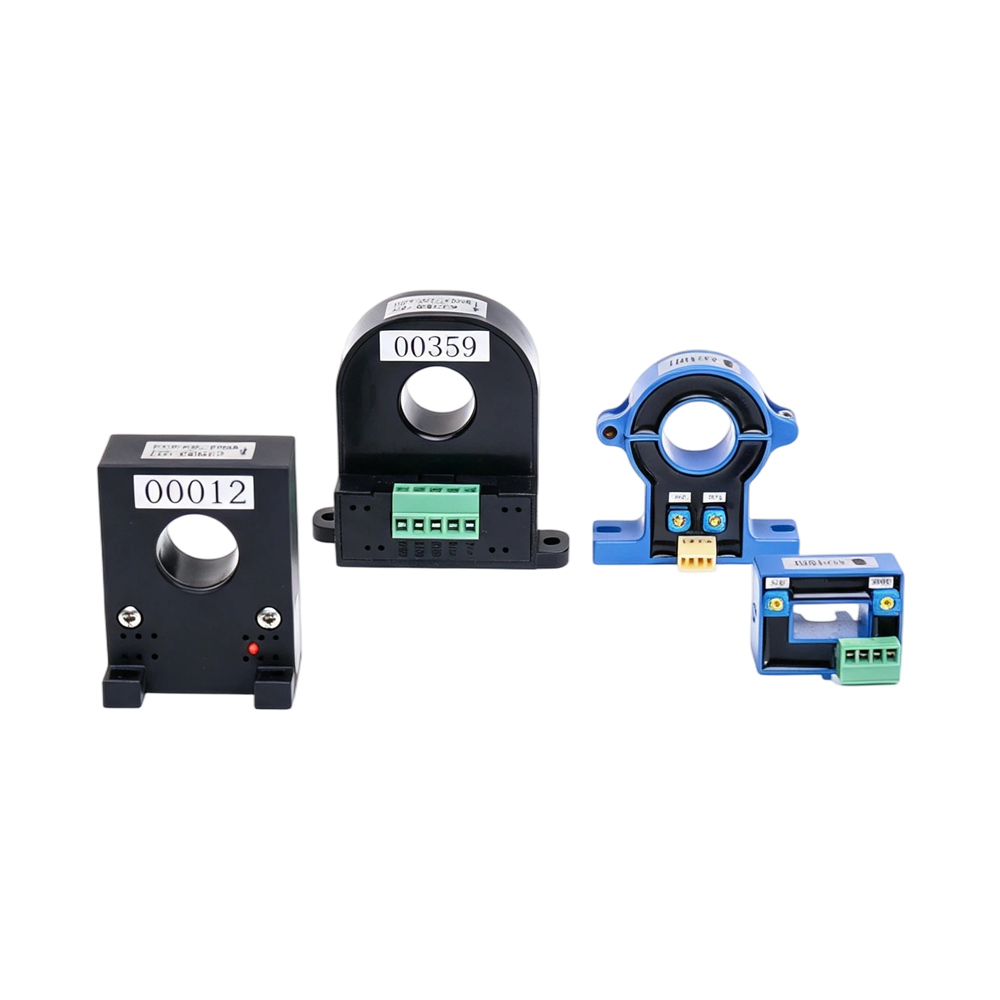
The 150A 4V Hall Effect Current Transformer and 0.5 Accuracy Hall Effect Current Sensor are designed for applications where stable current measurement, compact integration, and reliable signal output are important. These Hall effect-based sensing components can be integrated into electric meters to monitor current without requiring a direct conductive connection between the high-current circuit and the measurement electronics.
With suitable system design and calibration, Hall effect current sensors can provide a practical solution for modern electricity meters, supporting accurate energy monitoring and helping metering equipment respond to the increasing demand for digital and intelligent power management.

How Hall Effect Current Sensors Work in Electric Meters
A Hall effect current sensor measures electrical current by detecting the magnetic field generated when current passes through a conductor. Unlike traditional current measurement methods that may require direct electrical contact with the measured circuit, Hall effect technology can provide electrical isolation between the primary current path and the secondary measurement circuit.
This characteristic is particularly valuable for electric meters. The current-carrying conductor may handle relatively high current, while the meter’s internal electronic components generally operate at much lower signal levels. A Hall effect sensor can detect the magnetic field produced by the current and convert the measurement into an electrical output that can be processed by the meter’s electronic circuit.
The 150A 4V Hall Effect Current Transformer is particularly suitable for applications requiring current measurement up to a 150A range, depending on the specific sensor configuration and operating conditions. Its 4V output specification can provide a convenient signal interface for electronic measurement circuits when properly matched with the meter’s signal-processing system.
Inside an electric meter, the sensor can work together with components such as microcontrollers, analog-to-digital converters, voltage measurement circuits, and communication modules. The current signal detected by the Hall effect sensor can be converted into digital information and used to calculate electrical parameters such as current, power, and energy consumption.
Another important advantage is isolation. Since the sensing principle relies on magnetic-field detection, the measurement electronics can remain electrically separated from the primary high-current circuit. This can simplify circuit design and contribute to safer system architecture when appropriate insulation and installation requirements are met.
For smart electric meters, current measurement is also important for data collection and energy management. Reliable current sensing enables the meter to continuously monitor electrical load conditions and provide measurement data for local displays, remote communication systems, or energy management platforms.
Advantages of a 0.5 Accuracy Hall Effect Current Sensor for Energy Metering
Measurement accuracy is a critical consideration when selecting current sensors for electric meters. Even small measurement deviations can become significant when electricity consumption is monitored continuously over long periods. The 0.5 Accuracy Hall Effect Current Sensor is designed for applications where stable and relatively precise current measurement is required.
A 0.5 accuracy specification indicates a relatively high level of measurement precision under the applicable test and operating conditions. However, the actual system accuracy of an electric meter depends on more than the sensor itself. Factors such as temperature, PCB design, calibration, power supply stability, signal conditioning, installation, and the characteristics of the measured current can all influence final measurement performance.
One of the major benefits of Hall effect technology is non-contact current detection. The sensor does not need to introduce a significant voltage drop into the primary current path simply to measure current. This can be beneficial for electric meter designs because reducing unnecessary losses helps support efficient operation of the measurement system.
Hall effect sensors can also support compact electronic designs. As electric meters become smaller and more integrated, manufacturers need sensing components that can work effectively within limited PCB and enclosure space. A suitable Hall effect sensor can be incorporated into the current measurement section without requiring a large external measurement structure.
Another advantage is the ability to measure current in different electrical environments. Depending on the sensor design, Hall effect technology can be used for AC or DC current measurement. This makes Hall effect sensing useful in a broad range of power-related applications, although the exact measurement capability should always be confirmed according to the sensor’s technical specifications.
For electricity meters, temperature stability is another important consideration. Meters may operate in environments with changing temperatures, so the current sensing component needs to maintain predictable performance across its specified operating range. Selecting a sensor with suitable temperature characteristics and applying appropriate calibration can help improve overall measurement consistency.
The 0.5 Accuracy Hall Effect Current Sensor can therefore be considered for applications where electric meter manufacturers need a balance between measurement precision, electrical isolation, compact design, and integration flexibility.

Choosing the Right Hall Effect Current Transformer for Electric Meter Design
Selecting a current sensor for an electric meter requires more than simply choosing a sensor according to its maximum current rating. Engineers should consider the complete measurement system, including the electrical characteristics of the meter, expected load conditions, output signal, accuracy requirements, installation method, and environmental conditions.
For systems with current levels approaching 150A, the 150A 4V Hall Effect Current Transformer can be considered as a suitable sensing solution when its electrical specifications match the requirements of the meter. The current range should be selected according to the actual operating current rather than simply choosing the highest available rating. A properly matched current range can help the measurement circuit make effective use of the sensor’s output signal.
The output interface is another important consideration. A 4V output can be integrated with suitable signal-processing electronics, but the input range of the following circuit must be checked carefully. The sensor output, ADC input range, signal conditioning circuit, power supply, and PCB layout should work together as a complete system.
Accuracy requirements should also be evaluated at the system level. When using a 0.5 Accuracy Hall Effect Current Sensor, designers should consider sensor accuracy together with other error sources. Calibration can be used to compensate for certain predictable deviations, while proper PCB layout can help reduce interference and improve signal integrity.
Thermal performance should not be overlooked. Electric meters may be installed in indoor or outdoor environments, and the sensor should be selected according to the expected temperature range. Mechanical installation, insulation, vibration resistance, and long-term operating conditions may also affect sensor performance.
For smart metering applications, communication and data-processing requirements are becoming increasingly important. A current sensor does not operate independently; it forms part of a larger measurement chain that may include voltage sensing, power calculation, energy accumulation, data storage, and communication. A well-designed Hall effect sensing solution can provide the current signal required by these downstream systems.
The 150A 4V Hall Effect Current Transformer and 0.5 Accuracy Hall Effect Current Sensor offer useful characteristics for modern electric meter applications where accurate current measurement and electrical isolation are important. By combining Hall effect sensing technology with appropriate calibration and signal-processing circuitry, electric meter manufacturers can develop reliable solutions for residential, commercial, and industrial energy monitoring.
As the demand for smart electricity meters continues to grow, current sensing technology will remain an important part of energy measurement systems. Choosing the appropriate Hall effect sensor based on current range, accuracy, output characteristics, temperature performance, isolation requirements, and overall system compatibility can help create electric meters that deliver stable and dependable measurement performance.
Post time: Sep-17-2026