

In modern electrical systems, accurate current measurement is essential for energy management, equipment protection, and system optimization. Among the most widely used devices for non-intrusive current measurement are the Split Core Current Transformer, Split Core Current Transducer, and Split Core Current Sensor. These devices are designed to simplify installation, improve monitoring accuracy, and enhance safety in both industrial and commercial applications. This article explores their working principles, differences, and practical uses in today’s power systems.
Understanding the Split Core Current Transformer
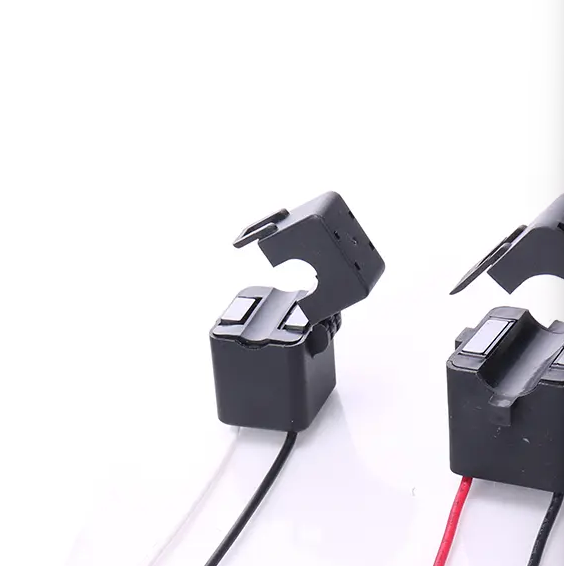
The Split Core Current Transformer is a specialized type of current transformer designed with a hinged core that can be opened and clamped around an existing conductor without disconnecting the electrical circuit. This feature makes it highly practical for retrofit installations and live systems where shutdown is not possible.
At its core, this device operates on the principle of electromagnetic induction. When alternating current flows through a conductor, it generates a magnetic field. The split core transformer captures this magnetic field and induces a proportional current in its secondary winding. This transformed current is then used for measurement, monitoring, or protection purposes.
One of the major advantages of the Split Core Current Transformer is its ease of installation. Traditional current transformers require the conductor to be disconnected and threaded through the core, which can be time-consuming and risky. In contrast, the split core design allows quick installation around live wires, significantly reducing downtime.
These transformers are widely used in energy metering systems, industrial automation, and power distribution monitoring. They are especially valuable in retrofit projects where existing infrastructure must be upgraded without interrupting operations. Additionally, they are available in various accuracy classes, making them suitable for both billing-grade metering and general monitoring applications.
The Role of the Split Core Current Transducer in Modern Systems
The Split Core Current Transducer builds upon the functionality of the split core transformer but adds signal conversion capabilities. While a transformer typically outputs an AC current signal, a transducer converts this signal into a standardized output such as DC voltage, DC current, or digital signals.
This conversion makes the Split Core Current Transducer highly compatible with modern control systems, including PLCs (Programmable Logic Controllers), building management systems (BMS), and IoT-based energy monitoring platforms. It bridges the gap between raw current measurement and digital data processing.
The working principle remains based on electromagnetic induction, but the integrated electronics within the transducer process the signal further. This allows for features such as signal filtering, amplification, and linearization, ensuring accurate and stable output even in electrically noisy environments.
One of the key benefits of the Split Core Current Transducer is its versatility. It can be used in applications ranging from industrial automation to renewable energy systems such as solar and wind power monitoring. It also supports real-time data acquisition, making it essential for smart grid systems and energy efficiency programs.
Another important advantage is safety. Since the device uses a split core design, it can be installed without direct electrical contact with the conductor, reducing the risk of electric shock and improving operational safety during maintenance or upgrades.
Applications and Advantages of the Split Core Current Sensor
The Split Core Current Sensor is a broader term that often encompasses both split core transformers and transducers designed for current detection and monitoring. It is widely used in applications where non-invasive, real-time current measurement is required.
In building energy management systems, the Split Core Current Sensor plays a crucial role in tracking energy consumption across different circuits. This helps facility managers identify inefficiencies, optimize energy usage, and reduce operational costs. In industrial environments, it is used to monitor motor loads, detect overload conditions, and ensure equipment operates within safe limits.
One of the most significant advantages of the Split Core Current Sensor is its flexibility. It can be easily installed on existing wiring systems without interrupting power, making it ideal for both new installations and retrofit projects. This plug-and-play capability reduces installation time and labor costs significantly.
In addition, modern split core sensors are designed with high accuracy and stability. Many models feature advanced magnetic core materials and precision winding techniques to minimize measurement errors. Some versions also include digital communication interfaces, allowing seamless integration into smart monitoring systems and industrial IoT platforms.
Another important application area is renewable energy. In solar photovoltaic systems, the Split Core Current Sensor is used to monitor inverter output and load distribution. In wind energy systems, it helps track generator performance and detect faults early. This contributes to improved system reliability and energy efficiency.
Furthermore, these sensors are widely used in data centers, where precise current monitoring is essential to ensure uninterrupted operation of critical IT infrastructure. They also play a key role in predictive maintenance systems by providing real-time data that can be analyzed to detect potential failures before they occur.
In conclusion, the Split Core Current Transformer, Split Core Current Transducer, and Split Core Current Sensor represent essential technologies in modern electrical measurement and monitoring systems. Each device offers unique advantages, from simple current transformation to advanced signal processing and smart system integration. Their ease of installation, high accuracy, and adaptability make them indispensable tools in industrial automation, energy management, and renewable energy applications. As electrical systems continue to evolve toward smarter and more efficient operations, these split core devices will remain at the core of reliable and intelligent current monitoring solutions.
Post time: May-15-2026