

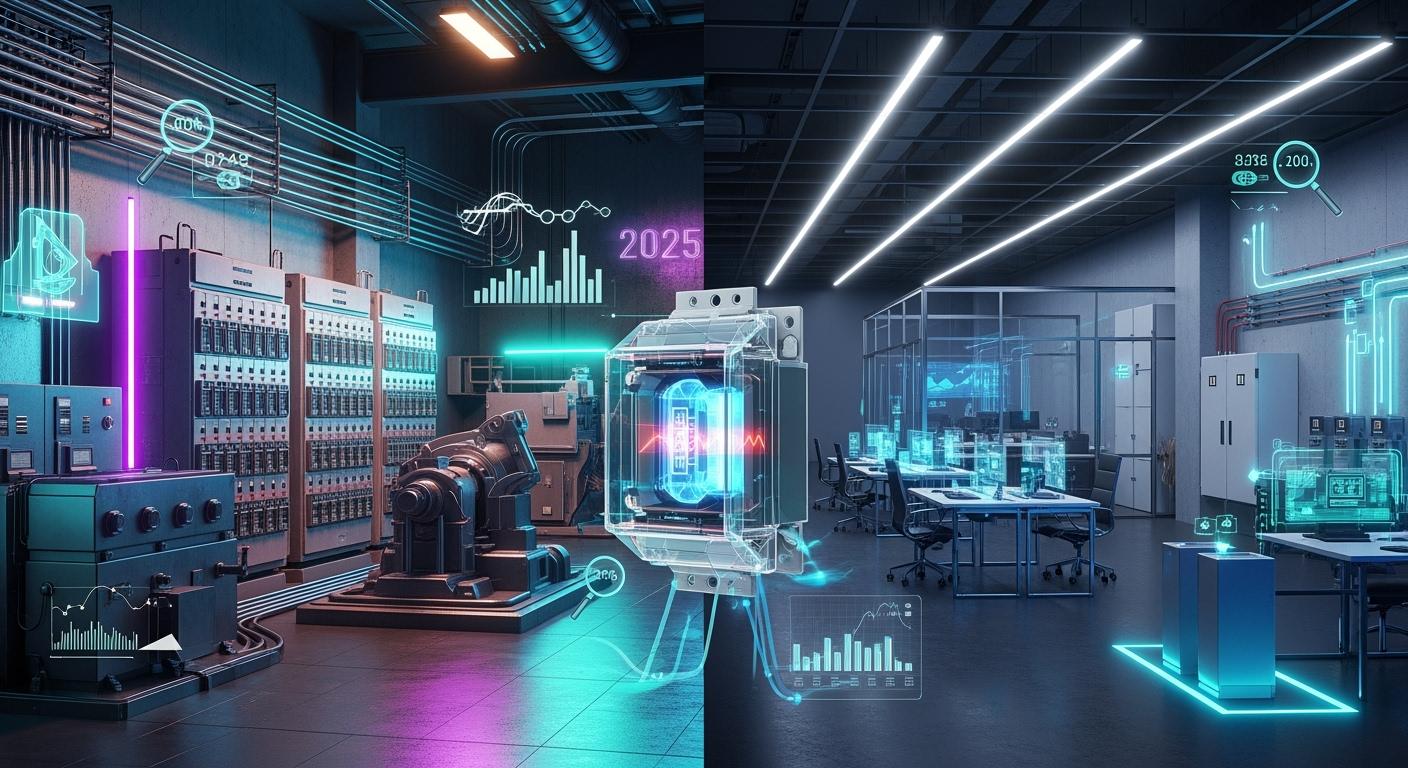
Low voltage CTs play a key role in both industrial and commercial settings, but their uses differ in important ways. Industrial systems need precise current measurement and robust energy management, which makes them the largest users of these devices as of 2025. Commercial applications, like retail and office spaces, now see rapid growth because of rising energy management needs. Voltage range, system complexity, and strict regulatory compliance drive the selection process. Qualified personnel must handle CT installation and maintenance to ensure safety and accuracy.
Market trends show strong growth in the Asia-Pacific region, with China, India, and Japan leading due to industrialization and urbanization. Latin America and the Middle East & Africa also show notable expansion from new infrastructure projects and economic diversification.
What Are Low Voltage CTs
Core Functions
Low voltage CTs, also known as current transformers, perform essential tasks in electrical systems. These transformers measure electric current accurately without interrupting the power supply. This feature ensures that service continues and prevents power losses. CTs convert high currents into manageable low-voltage signals, which increases safety for maintenance workers and reduces the risk of electrical accidents. The transformers allow for continuous monitoring of system performance, making it easier to detect problems early. They also help control loads by enabling automatic adjustments based on energy availability. This process supports fair energy distribution and lowers operational costs. CTs collect data for performance analysis, which helps organizations make informed decisions about their energy use. Indoor current transformer and outdoor current transformer models serve different environments, but both types share these core functions.
Accurate current measurement and safe signal conversion make CTs vital for modern electrical applications.
Role in Electrical Systems
Current transformers play a key role in the safety and efficiency of electrical systems. Their measurement accuracy ensures reliable data for billing and monitoring. Operators benefit from robust electrical isolation, which protects instruments and people from high currents. The transformers offer cost-effectiveness by removing the need for expensive direct measurement equipment. Their compact design fits easily into limited spaces. Minimal maintenance leads to lower operational costs and greater reliability. These transformers remain stable across different temperatures and load conditions. They consume little power, which improves energy efficiency. Compliance with international safety standards gives operators peace of mind.
- Measurement accuracy supports billing and monitoring.
- Electrical isolation protects instruments and operators.
- Cost-effectiveness reduces equipment expenses.
- Compact design allows easy installation.
- Minimal maintenance increases reliability.
- Stability across temperatures and loads.
- Low power consumption boosts energy efficiency.
- Compliance with safety standards ensures trust.
Current transformers, whether used as an indoor current transformer or outdoor current transformer, form the backbone of safe and efficient electrical systems in many applications.
Low Voltage CTs in Industrial Applications
Voltage Range and System Complexity
Industrial environments use low voltage CTs across a wide voltage range, typically from 480V up to 35kV. These transformers must handle complex systems that support heavy machinery and continuous operations. Industrial applications demand more advanced CT solutions because of several factors:
- Harsh conditions such as heat, dust, and chemicals challenge transformer durability.
- Facilities often operate 24/7, so reliability becomes critical.
- Energy efficiency remains a top priority for cost control.
- Space constraints in older buildings require compact and innovative transformer designs.
Current transformers in industrial settings must adapt to these challenges. Engineers select transformer models that provide accurate current measurement and withstand demanding environments.
Performance Needs
Industrial transformers must meet strict performance requirements to ensure safe and reliable operation. The following table highlights the most important criteria:
| Performance Requirement | Description |
|---|---|
| Accuracy | Delivers precise current measurement for dependable energy metering and system control. |
| Burden Requirements | Maintains load within limits to prevent transformer saturation and measurement errors. |
| Frequency Response | Measures different frequencies, especially during faults, for accurate detection. |
| Thermal Capacity | Handles high temperatures from fault currents without damage. |
| Installation Requirements | Requires proper installation for accurate operation and protection. |
| Protection and Safety | Includes features to prevent damage from high fault currents. |
| Compatibility with Protective Devices | Works with protective systems for effective fault response. |
| Regular Monitoring and Maintenance | Needs ongoing checks to maintain accuracy and performance. |
Transformers in industrial applications must deliver consistent measurement and integrate with protective devices. These requirements support safe operation and efficient energy metering.
Safety and Compliance
Safety and regulatory compliance guide every step in industrial transformer installation and maintenance. Key standards include:
- UL 1310 sets safety requirements for transformers in industrial environments.
- OSHA Electrical Safety Standards protect workers from hazards like electric shock and arc flash.
- National Electrical Code (NEC) provides rules for safe wiring and equipment installation.
- Use of personal protective equipment (PPE) ensures worker safety near transformers.
- Safe installation and maintenance procedures help prevent accidents and maintain system reliability.
Industrial teams follow these standards to ensure transformers operate safely and meet legal requirements. Proper compliance supports long-term reliability and protects both personnel and equipment.
Low Voltage CTs in Commercial Applications
Typical Voltage Levels
Commercial buildings rely on a range of voltage levels to support lighting, appliances, and equipment. Low voltage CTs help measure and monitor these levels for safe operation. The following table shows the most common voltage levels and their typical uses in commercial settings:
| Voltage Level | Common Applications |
|---|---|
| 120 Volts | Standard household applications, lighting, small appliances |
| 208 Volts | Commercial and industrial applications, three-phase power systems |
| 240 Volts | Larger appliances, industrial equipment, large commercial buildings |
| 277 Volts | Lighting and electrical systems requiring higher voltage |
| 347 Volts | Commercial lighting applications, high-pressure sodium lamps |
| 480 Volts | Large equipment, motors, pumps, compressors in commercial buildings |
| 600 Volts | Various equipment, motors, heavy machinery |
Current transformers in commercial buildings must handle these voltage levels to ensure accurate current measurement and reliable energy metering.
Installation and Maintenance
Proper installation and maintenance of transformers in commercial environments protect equipment and ensure safety. Technicians follow best practices to maintain performance and extend transformer lifespan. They keep installation sites clean and control temperature and humidity. They also shield transformers from vibration and shock. Routine inspections help identify dust, dirt, and corrosion. Electrical testing, such as insulation resistance and turns ratio tests, confirms transformer integrity. Monitoring environmental conditions supports stable operation.
Common challenges include incorrect installation, loose connections, and wiring errors. Incorrect sizing can cause output failure. Saturation from excessive current distorts measurement results. Technicians address these issues through regular checks and prompt repairs.
Regulatory Standards
Commercial applications must meet strict regulatory standards for transformer installation and operation. IEEE C57.94 outlines recommended practices for installation and maintenance. CSA C9 provides guidance for Canadian buildings. NEMA ST 20 sets performance and environmental requirements. These standards help ensure transformers operate safely and deliver accurate measurement. Compliance supports reliable energy metering and protects building occupants.
Comparing Industrial and Commercial Applications
Accuracy and Durability
Industrial environments demand high accuracy from transformer systems. These settings often involve heavy machinery and critical processes. Transformers must deliver precise measurements to support energy metering and system protection. Current transformers in industrial sites face harsh conditions. They must resist heat, dust, and vibration. Engineers select transformer models with strong insulation and robust construction. These features help the transformer last longer and maintain accuracy over time.
Commercial buildings use transformers in less demanding conditions. Office spaces and retail stores do not expose transformers to extreme temperatures or chemicals. The transformer in these settings focuses on reliable operation and basic safety. Accuracy remains important for billing and monitoring, but the requirements are less strict than in industrial sites. Commercial transformers often have a simpler design. They still provide dependable service for lighting and equipment.
Note: Industrial transformers usually have a longer service life because of their durable build. Commercial transformers may need replacement sooner if exposed to unexpected stress.
Installation Complexity
Installation of transformers in industrial facilities involves many steps. Technicians must follow detailed plans and safety rules. They often work with large transformer units and complex wiring. The transformer must fit into existing systems without causing downtime. Teams use special tools and protective gear. They check every connection to prevent faults. The process can take several days or even weeks.
Commercial transformer installation is more straightforward. Technicians handle smaller units and simpler wiring. They can complete most installations in a few hours. The transformer usually fits into standard panels or enclosures. Safety checks remain important, but the risks are lower. Teams can finish the job with basic tools and less training.
| Aspect | Industrial Installation | Commercial Installation |
|---|---|---|
| Unit Size | Large and heavy | Small and lightweight |
| Wiring Complexity | High | Low |
| Safety Requirements | Strict | Standard |
| Time Needed | Days to weeks | Hours |
| Tools and Equipment | Specialized | Basic |
Cost and Compliance
Industrial transformers cost more than commercial models. The higher price comes from advanced features and durable materials. These transformers must meet strict safety and performance standards. Companies invest in regular maintenance to keep the transformer working well. They also follow rules from agencies like OSHA and the NEC. Fines and downtime can result from non-compliance.
Commercial transformers have a lower price. Building owners focus on basic safety and reliable service. They follow local codes and standards, such as IEEE and NEMA. Maintenance costs stay low because the transformer faces fewer risks. Compliance remains important, but the process is simpler.
Tip: Choosing the right transformer for each application helps avoid extra costs and ensures safe operation. Teams should review all compliance rules before starting any installation.
Low voltage CTs serve both industrial and commercial applications, but the differences in accuracy, installation, and compliance shape the selection process. Each environment requires a transformer that matches its unique needs.
Selection Criteria for 2025
Assessing Application Needs
Selecting low voltage CTs for 2025 projects requires a clear understanding of the environment and the specific demands of each application. Engineers must match the transformer to the type of system, whether it is for revenue metering, protection relays, generator protection, temporary monitoring, or digital substations. Each use case has unique requirements for accuracy, installation, and compliance. The following table summarizes the main specifications for different applications:
| Application Type | Required Specifications | Standards/Notes |
|---|---|---|
| Revenue Metering | Metering class 0.2S or better, low phase displacement | Align with IEC 61869-2 and local utility codes |
| Protection Relays | 5P, 10P, PX, or IEEE C-class CTs | Ensure adequate knee-point voltage for relays |
| Generator Protection | Bar-type CTs with high accuracy at subtransient levels | Per IEEE C37.102 |
| Temporary Monitoring | Split-core or Rogowski coils | Safe installation without downtime |
| Digital Substations | Optical CTs and low-energy sensors | Pair with merging units per IEC 61850-9-2 |
Engineers must review the voltage range, system complexity, and the need for precise measurement. Industrial environments often require robust current transformers that can withstand harsh conditions and deliver reliable accuracy. Commercial settings may focus on ease of installation and basic safety, but still need dependable measurement for billing and monitoring.
Tip: Matching the transformer to the application ensures safe operation and compliance with local standards.
Technology and Trends
Emerging technology trends are changing how engineers select current transformers for both industrial and commercial projects. Smart transformers now include sensors for real-time monitoring of temperature, load, and other critical parameters. These devices connect to SCADA and cloud platforms, allowing operators to analyze data and improve system performance. Edge computing features enable transformers to make decisions locally, such as adjusting load or signaling maintenance needs.
- Smart transformers provide instant feedback on system health.
- Communication modules allow remote access and control.
- Edge computing supports self-regulation and faster response to faults.
Engineers use simulation tools to predict transformer behavior under different loads and environmental conditions. These tools help detect insulation aging or winding deformation. Maintenance teams can prioritize repairs based on risk, rather than following a fixed schedule. This approach reduces downtime and extends the life of the transformer.
- Simulate transformer behavior under various load and environmental conditions.
- Detect signs of insulation aging or winding deformation.
- Prioritize maintenance based on risk rather than fixed schedules.
Note: Adopting new technology improves accuracy and reliability in all applications.
Regulatory Updates
Regulatory standards continue to evolve, and engineers must stay informed about new requirements for low voltage CTs. Updated codes often address safety, installation practices, and performance benchmarks. Compliance with standards such as IEC 61869-2, IEEE C37.102, and local utility codes is essential. These rules protect workers and ensure accurate energy metering.
Qualified personnel must handle installation and maintenance. The table below outlines the main qualifications for technicians working with current transformers in 2025:
| Requirement | Details |
|---|---|
| Age Requirement | Must be at least 18 years old |
| Experience Requirement | Four years of journeyman-level experience; or three years’ apprenticeship and one year of on-the-job training. |
| Examination Requirement | Must pass the Low Voltage Systems Examination and the Law and Business Exam |
| Background Check Requirement | Must pass an FBI background and fingerprint check |
| Bond Requirement | Supply proof of contractor’s bond |
| Application Fees | Initial application fee: $330, Two-year license card fee: $200, Background check: ~$75 |
Teams must verify that all technicians meet these standards before starting any project. Regular training helps workers stay current with new regulations and best practices.
Alert: Failing to comply with updated standards can lead to fines, safety risks, and system failures.
Vendor Selection
Choosing the right vendor for low voltage CTs is critical for project success. Engineers should evaluate vendors based on product quality, support services, and compliance with international standards. Reliable vendors offer transformers that meet the latest specifications and provide technical assistance during installation and maintenance.
- Review vendor certifications and product warranties.
- Ask for references from similar projects.
- Confirm that the vendor’s products align with updated regulatory standards.
- Assess the availability of after-sales support and training resources.
Selecting a trusted vendor reduces the risk of equipment failure and ensures long-term reliability. Engineers should compare multiple options and choose the supplier that best fits the needs of their application.
Tip: A strong partnership with a qualified vendor supports safe installation and ongoing system performance.
Mistakes and Best Practices
Industrial Pitfalls
Industrial teams often encounter mistakes when working with current transformers. The most common errors can lead to safety hazards and inaccurate readings. The table below highlights frequent pitfalls, their implications, and solutions:
| Mistake | Implication | Solution |
|---|---|---|
| Incorrect CT Orientation | Reversed power readings leading to inaccurate data. | Verify source and load direction before installation. |
| Leaving the Secondary Circuit Open | Creates a dangerous high voltage hazard. | Always use a shorting block to prevent open secondary conditions. |
| Wrong CT Ratio Selection | Can lead to saturation or poor accuracy in measurements. | Select a CT ratio that matches the normal operating current range of the system. |
| Improper Conductor Centering | Causes measurement inaccuracies due to flux leakage. | Ensure the primary conductor is centered within the CT window for optimal performance. |
| Failure to Inspect for Damage | Risk of using faulty equipment leading to inaccurate readings. | Regularly inspect CTs for any signs of damage before installation. |
| Inadequate Grounding of the Secondary | Increases the risk of electrical shock and equipment damage. | Ensure proper grounding of the CT’s secondary circuit. |
| Mismatching CTs in a Three-Phase System | Results in inaccurate readings and potential system imbalance. | Use matched CTs for all phases to ensure consistent and accurate measurements. |
| Exceeding the Burden Rating of the CT | Can lead to inaccurate readings and potential damage to the CT. | Always check the burden rating and ensure it is not exceeded during operation. |
Commercial Pitfalls
Commercial projects face their own challenges with current transformers. Teams can avoid common mistakes by following best practices:
- Plan before installing. Design diagrams and map every route.
- Choose the right materials. Select cable types that meet data and power needs.
- Account for voltage drop. Use proper gauge for long runs.
- Keep separation from power lines. Maintain distance to avoid EMI.
- Use proper terminations. Follow manufacturer guidelines and ground correctly.
- Test thoroughly. Verify continuity, load, and signal integrity.
- Document everything. Label cables, maintain schematics, and log test results.
- Comply with code. Follow NEC and local regulations.
- Future-proof. Plan pathways for upgrades and scalability.
- Train or hire certified professionals. Expertise reduces long-term risks.
Careful planning and documentation help commercial teams maintain transformer performance and safety.
Installation Tips
Industry experts recommend several tips to ensure optimal performance of low voltage CTs:
- Select the correct transformer type based on current rating and environment.
- Position the transformer correctly around the conductor, matching the manufacturer’s orientation.
- For split-core designs, open the core, place it around the conductor, and securely close it.
- Disconnect the conductor before installing solid-core transformers.
- Connect secondary terminals to measuring devices or protection relays and verify all connections for tightness.
- Ground the secondary side to avoid hazardous voltages.
- Inspect transformers regularly for wear, corrosion, or overheating.
- Clean the core and terminals to remove dust and debris.
- Check outdoor transformers for moisture ingress or physical damage.
- Test insulation resistance and secondary circuit continuity periodically.
- Perform calibration checks to ensure reliable current readings.
Ensuring Reliability
Long-term reliability of current transformers depends on several strategies. The table below outlines effective methods for both industrial and commercial settings:
| Strategy | Description |
|---|---|
| Insulation Materials | Use materials like Nomex, Mylar, or epoxy resin based on temperature class and environment. |
| Cooling Methods | Implement natural air cooling or forced air systems for higher ratings. |
| Precision Manufacturing | Techniques like precision stamping and vacuum pressure impregnation ensure mechanical rigidity. |
| Performance Evaluation | Regular assessments on voltage regulation, efficiency, thermal performance, and noise levels. |
| Compliance with Standards | Adhere to UL, CSA, IEC, and NEMA standards for safety and efficiency. |
| Testing Procedures | Conduct tests like dielectric withstand and temperature rise to ensure reliability. |
Teams that follow these strategies improve transformer accuracy and extend service life. Regular testing and compliance with standards protect both equipment and personnel.
Industrial and commercial applications require different approaches when selecting low voltage CTs. Voltage range sets operational limits and accuracy. System complexity demands adaptable testing and precise burden measurement. Compliance with international standards ensures project approval in global markets. Industry experts recommend choosing CTs with durable designs, user-friendly interfaces, and modern connectivity. Up-to-date knowledge and expert guidance help teams match CTs to system needs, supporting reliable and safe performance in 2025.
FAQ
What is the main difference between industrial and commercial low voltage CTs?
Industrial CTs handle higher voltages and complex systems. They offer greater accuracy and durability. Commercial CTs work with lower voltages and simpler setups. They focus on easy installation and basic safety.
How often should teams inspect low voltage CTs?
Teams should inspect CTs at least once a year. Regular checks help find damage, dirt, or loose connections. Early detection prevents measurement errors and safety risks.
Which standards apply to low voltage CTs in 2025?
Key standards include IEC 61869-2, IEEE C37.102, UL 1310, and NEMA ST 20. These standards guide safety, installation, and performance. Compliance ensures reliable operation and protects workers.
Can commercial CTs be used in industrial settings?
Commercial CTs do not suit industrial environments. Industrial systems need CTs with higher accuracy and durability. Using commercial CTs in these settings may cause measurement errors and safety issues.
What are common mistakes during CT installation?
Common mistakes include incorrect orientation, open secondary circuits, and wrong ratio selection. Teams should follow manufacturer instructions and safety guidelines. Proper training reduces errors and improves reliability.
Post time: Dec-12-2025