

Electricity meters are essential devices in modern power distribution and energy management systems. With the development of smart grids and digital metering technology, electricity meters are becoming increasingly intelligent, providing users and utility companies with more convenient ways to monitor and manage energy consumption. As one of the most important user interface components, the display module allows users to view electricity usage, voltage, current, power, and other measurement information clearly and conveniently.
Among various display technologies, LCD segment displays are widely used in residential, commercial, and industrial electricity meters because of their low power consumption, clear numerical presentation, and stable operating performance. Combined with an appropriate LED Backlight, these displays can provide improved visibility in dark environments and different lighting conditions.
For manufacturers with specific product requirements, a Customized LCD/LCM Segment Display For Metering offers flexible design possibilities. Display size, segment patterns, viewing angle, connection methods, and backlight colors can be customized according to different electricity meter structures and functional requirements. These customized solutions help meter manufacturers develop reliable and user-friendly energy measurement products.
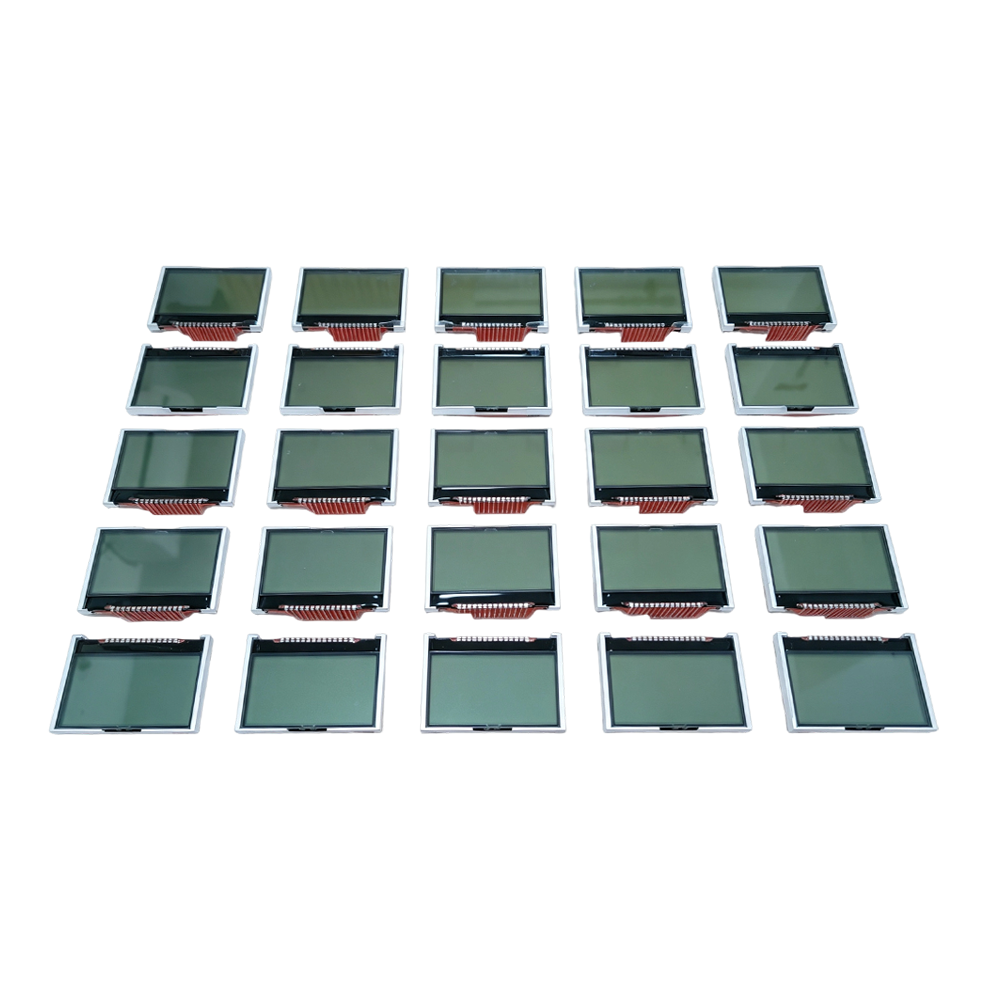
LCD Segment Display: A Reliable Display Solution for Electricity Meters
An LCD Segment is a liquid crystal display component designed to present information through predefined segments, such as numbers, letters, symbols, and icons. Unlike full-matrix displays that can show complex graphics, segment displays are optimized for displaying specific information in a clear and energy-efficient way.
In electricity meters, LCD segment displays are commonly used to show accumulated energy consumption, voltage, current, power factor, frequency, and other electrical parameters. For example, residential users can check their electricity consumption directly from the meter screen, while utility technicians can access measurement data during inspection and maintenance.
One of the main advantages of LCD segment technology is its low power consumption. Electricity meters are designed for continuous operation, often over many years. Therefore, minimizing the energy consumption of internal electronic components is an important design consideration. LCD technology requires relatively little power to maintain displayed information, making it suitable for battery-assisted meters and low-power electronic metering systems.
Another advantage is its clear numerical presentation. The predefined segment structure allows important data to be displayed in a simple and recognizable format. Large numerical digits make it easier for users to read energy consumption values, while additional icons and symbols can indicate operating modes, measurement units, communication status, and warning information.
LCD segment displays also offer flexibility in terms of size, layout, and viewing angle. Manufacturers can select different digit heights, segment configurations, display dimensions, and connector types according to the internal structure of their electricity meters.
For smart meter manufacturers, selecting a suitable LCD Segment requires considering operating temperature, contrast ratio, viewing direction, response characteristics, electrical connection, and environmental conditions. Proper display design helps ensure that important metering information remains readable and consistent throughout the product’s intended service life.
LED Backlight: Improving Display Visibility in Smart Electricity Meters
An LED Backlight is a lighting component used to illuminate LCD displays, making displayed information easier to read in low-light or dark environments. Since conventional LCD segment displays do not generate their own light, a backlight can be integrated when additional visibility is required.
In electricity meter applications, backlighting is particularly useful for meters installed in basements, electrical cabinets, utility rooms, outdoor meter boxes, and other locations where natural lighting may be limited. With an LED backlight, users and maintenance personnel can read energy consumption data without relying entirely on external lighting.
Different backlight colors can also be selected according to product design requirements. Common options include white, green, blue, and other customized colors. The choice of color may depend on display contrast, product appearance, readability, and customer preferences.
Energy efficiency is another important consideration. Since electricity meters generally operate continuously, the backlight control system should be designed to avoid unnecessary power consumption. Some smart meters use a push-button or automatic activation function, allowing the LED backlight to turn on only when users need to view the display. It can then switch off after a predefined period to reduce energy usage.
The LED backlight should also be matched with the LCD panel to achieve suitable brightness and uniform illumination. Poorly designed lighting may cause uneven brightness or reduce display readability. Therefore, manufacturers should consider LED quantity, light guide structure, brightness, color temperature, and power requirements during the design process.
In addition, the backlight module needs to be compatible with the LCD dimensions and installation structure. A properly integrated LED Backlight can improve the user experience while maintaining the compact design and functional reliability required by modern electricity meters.
Customized LCD/LCM Segment Display For Metering: Design and Applications
A Customized LCD/LCM Segment Display For Metering is a display solution developed according to the specific technical and structural requirements of electricity meter manufacturers. LCD refers to the liquid crystal display panel, while LCM generally refers to a liquid crystal module that may integrate the LCD panel, driver IC, backlight, and other supporting components.
Customization is important because different electricity meters have different display requirements. Residential smart meters may need simple numerical displays for energy consumption, while commercial and industrial meters may require additional icons and symbols to present multiple electrical parameters.
For example, a customized display can include numerical digits for kWh readings, voltage and current indicators, frequency symbols, tariff information, and communication status icons. These predefined segments help users understand the meter’s operating information quickly and accurately.
Display dimensions are another important customization factor. The LCD or LCM module can be designed with different lengths, widths, thicknesses, and viewing areas to fit specific meter housings. Manufacturers can also specify the number of digits, segment patterns, connector positions, and mounting structures according to their product designs.
Different electrical and optical specifications can also be customized. These include operating voltage, drive method, viewing angle, display contrast, operating temperature range, and backlight color. For meters used in outdoor or demanding environments, the display should be selected according to the required temperature and environmental conditions.
In addition to traditional electricity meters, customized LCD/LCM segment displays can be used in smart energy meters, prepaid electricity meters, multi-phase meters, power monitoring devices, and other electrical measurement equipment. Their ability to present essential measurement information in a compact and energy-efficient format makes them a practical choice for different metering applications.
When selecting a customized display supplier, meter manufacturers should evaluate product quality, technical support, customization capabilities, production consistency, and testing procedures. Important quality checks may include display contrast, segment response, backlight uniformity, operating temperature performance, and electrical compatibility.
In conclusion, LCD segment displays and LED backlight modules are important components in modern electricity meters. A high-quality LCD Segment provides clear and energy-efficient data presentation, while an LED Backlight improves readability in low-light environments. Through customized dimensions, segment layouts, and integrated module designs, a Customized LCD/LCM Segment Display For Metering can meet the diverse requirements of residential, commercial, and industrial energy measurement systems. As smart metering technology continues to advance, customized display solutions will remain essential for developing reliable, efficient, and user-friendly electricity meters.
Post time: Nov-23-2026