

With the rapid development of smart grid technology and intelligent power distribution systems, electricity meters are becoming more advanced in energy measurement, remote communication, and load management. Modern smart meters do more than record electricity consumption. They can also support remote power connection and disconnection, load control, and energy management through integrated switching components. Among these components, the Latching Relay plays an important role in providing reliable switching functions with low power consumption.
Unlike conventional relays that require continuous power to maintain their operating state, a latching relay can retain its previous switching position after the control signal is removed. This feature makes it particularly suitable for electricity meters, where energy efficiency, compact dimensions, and long-term operational stability are important considerations.
A Magnetic Latching Relay uses a magnetic mechanism to maintain its contact position without requiring continuous coil energization. For smart electricity meter manufacturers, this technology offers an effective solution for controlling electrical circuits while reducing standby power consumption. Depending on the voltage and technical specifications, a 220VAC Latching Relay can also be selected for applications requiring an appropriate 220V AC control supply.
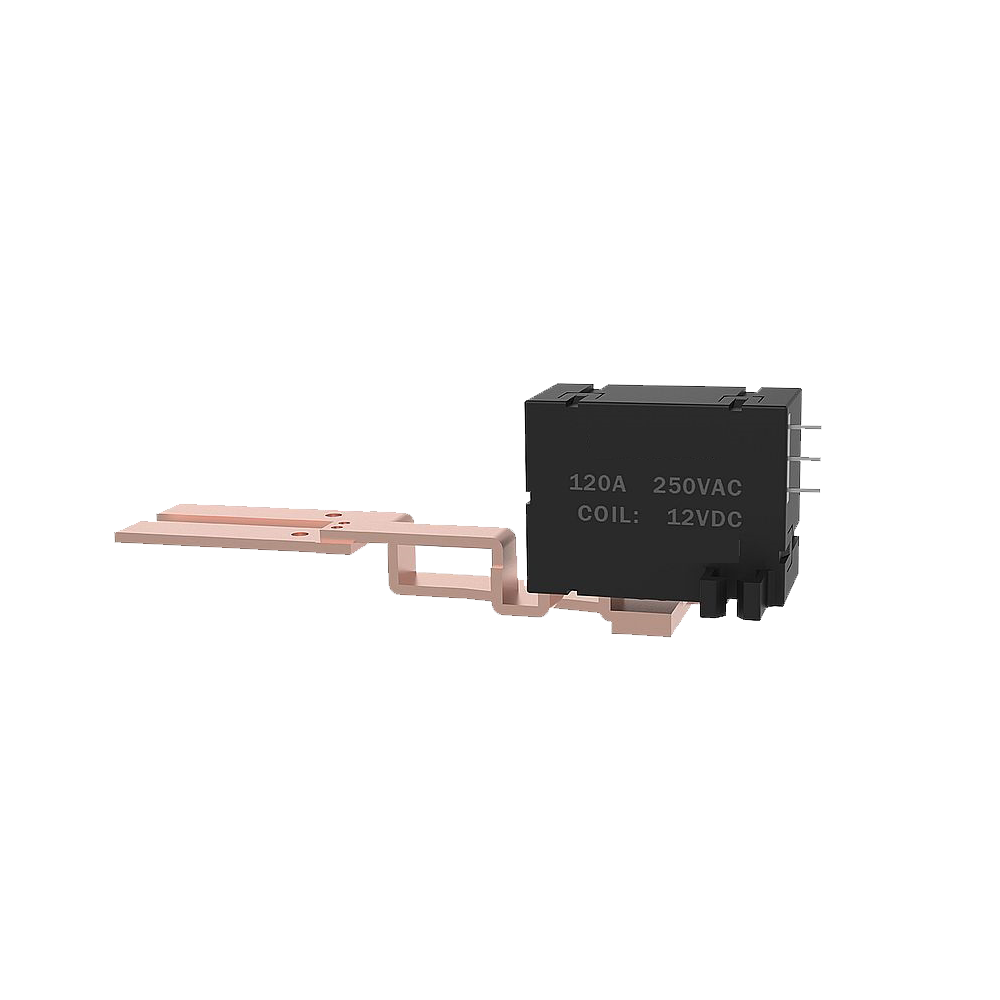
Working Principles and Key Advantages of Latching Relay in Electricity Meters
A Latching Relay is an electrically operated switching device designed to maintain its contact state after a short control pulse. It typically has two stable operating positions: normally open and normally closed, depending on the relay configuration. When a control signal is applied, the relay changes its contact position. Once the switching operation is completed, the relay remains in the new position even after the control signal is removed.
This operating principle is particularly useful in electricity meters. Traditional electromagnetic relays often require continuous coil power to maintain an energized state. In contrast, a latching relay only needs a short electrical pulse to switch between its operating positions. As a result, it can significantly reduce the energy required for maintaining the switching state.
One major advantage is low power consumption. Smart electricity meters are designed to operate continuously over long periods, and reducing internal power consumption is an important consideration. Since a latching relay does not need continuous energization to hold its contacts, it helps minimize unnecessary energy use within the meter.
Another advantage is its ability to retain the switching state during power interruptions. Depending on the relay design, the contacts remain in their last latched position even when the control power is removed. This characteristic helps maintain the intended switching status and can simplify the design of power control systems.
Compact construction is also important. Electricity meters have limited internal installation space, so switching components need to provide reliable performance within a relatively small footprint. Latching relays are available in different contact configurations, rated currents, coil voltages, and dimensions to meet the requirements of different meter designs.
In addition, contact reliability and electrical endurance are essential selection factors. A suitable Latching Relay should be designed to handle the specified load conditions, switching frequency, and electrical environment. These characteristics make it a valuable component for smart metering and remote power control applications.
Magnetic Latching Relay: An Efficient Solution for Smart Meter Switching
A Magnetic Latching Relay uses permanent magnets or a magnetic holding mechanism to maintain its contact position after switching. Unlike conventional relays that depend on continuous coil current, this type of relay uses magnetic force to keep the contacts in their selected state. A short pulse with the appropriate polarity or control arrangement changes the relay from one stable position to another.
In smart electricity meters, magnetic latching relays are commonly used for remote connection and disconnection functions. When a utility company needs to control a customer’s power supply, the smart meter can receive a command through its communication system. The internal control circuit then sends an electrical pulse to the relay, causing its contacts to open or close according to the required operation.
For example, when a remote disconnection command is received, the meter’s control circuit activates the relay to interrupt the load circuit. When reconnection is authorized, another control signal changes the relay back to the connected state. This process allows utility operators to manage power supply remotely without requiring a technician to visit the installation site, provided the meter and distribution system support this function.
The low holding power of a magnetic latching relay is especially valuable in smart metering equipment. Since the relay maintains its position without continuous coil energization, it helps reduce the meter’s internal energy consumption. This is beneficial for electronic meters that need to operate reliably over many years.
Another important feature is switching stability. A properly designed magnetic latching mechanism can provide consistent contact positioning, supporting dependable switching operations. The relay’s contact materials, rated load capacity, insulation performance, and mechanical structure must be selected according to the electrical requirements of the meter.
Manufacturers should also consider pulse voltage, pulse duration, coil resistance, reset characteristics, and operating temperature when selecting a Magnetic Latching Relay. These specifications influence compatibility with the meter’s control circuit and overall switching performance.
Applications of 220VAC Latching Relay in Electricity Meter and Power Management Systems
A 220VAC Latching Relay is a latching relay designed for applications involving a 220V AC control supply or operating environment, depending on its specific electrical specifications. It is important to distinguish between the relay’s coil or control voltage and its contact switching voltage. A relay with a 220VAC coil is not automatically suitable for switching every 220V AC load; its contact ratings and insulation specifications must also meet the application requirements.
In electricity meter systems, latching relays are mainly used in remote load switching and power supply control. Smart meters can integrate communication modules, electronic measurement circuits, and relay control units to support remote switching commands. When a valid command is received, the control circuit activates the relay to connect or disconnect the electrical load.
In residential electricity meters, this function can help utility providers manage household power connections and support prepaid electricity systems. For example, when a prepaid meter reaches a specified credit limit, the system may initiate a disconnection command according to its programmed rules. After the customer makes a payment, the meter can receive an authorized reconnection command.
In commercial and industrial metering applications, latching relays can also support load management and remote circuit control. They may be integrated into metering equipment used in offices, factories, commercial buildings, and distributed power systems. By enabling controlled switching, they help utility operators and energy management systems respond to changing electricity demand.
The application of 220VAC Latching Relay products is not limited to electricity meters. Depending on their rated specifications, they can also be used in power control equipment, automatic switching systems, energy management devices, and selected industrial control applications.
When choosing a latching relay for electricity meters, manufacturers should pay close attention to rated contact voltage, rated current, switching capacity, coil voltage, insulation strength, electrical endurance, mechanical endurance, and operating temperature. Compatibility with the meter’s control circuit and safety standards is essential. Customized relay dimensions, terminal configurations, and electrical parameters may also be required for different smart meter models.
In conclusion, the Latching Relay is an important switching component in modern electricity meters. Its low holding power, stable contact positioning, and suitability for remote control make it an effective solution for smart metering applications. With magnetic holding technology and appropriate voltage specifications, the Magnetic Latching Relay and 220VAC Latching Relay can support reliable power switching, efficient energy management, and the continued development of intelligent electricity measurement systems.
Post time: Nov-16-2026