

Current transformers (CTs) are essential components in modern electricity metering systems. They measure alternating current (AC) by converting high primary currents into smaller, standardized secondary currents that can be safely measured by meters and monitoring devices. By providing accurate current signals, current transformers help electricity meters calculate energy consumption, monitor electrical loads, and support reliable power management in residential, commercial, and industrial applications.
With the continuous development of smart grids, digital electricity meters, and intelligent energy management systems, the demand for reliable current transformers is increasing. Different metering applications require different transformer structures, installation methods, current ratings, and accuracy levels. Common options include Bar Type Current Transformer, Pcb Mount Current Transformer, Split Core Current Transformer, and Three Phase Current Transformer.
Understanding the characteristics and applications of these products helps electricity meter manufacturers, electrical equipment suppliers, and energy management companies select the most suitable components for their systems.
1. Understanding Different Types of Current Transformers for Electricity Meters
Current transformers are designed to meet different electrical measurement and installation requirements. Selecting the correct structure can improve measurement performance, simplify meter assembly, and support long-term operational stability.
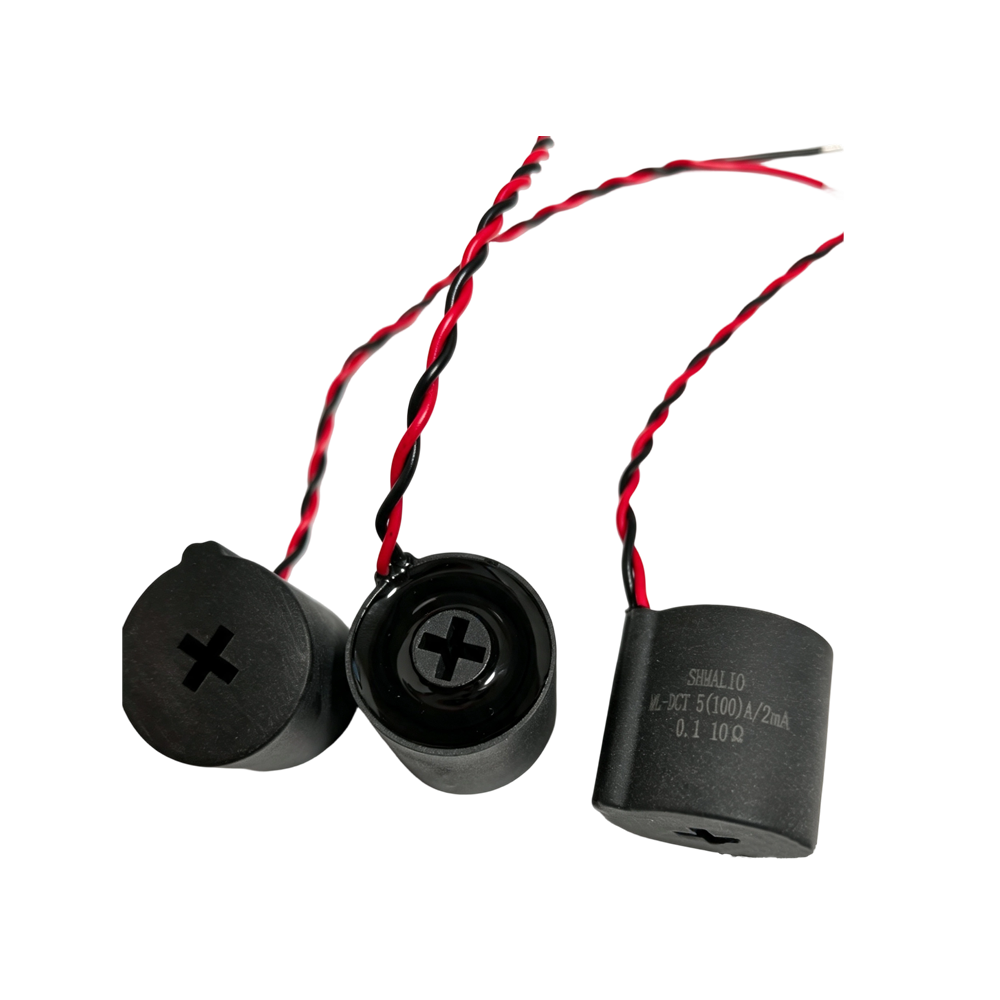
Bar Type Current Transformer
A Bar Type Current Transformer features a solid conductor or busbar that serves as the primary winding. The primary current flows directly through this conductor, while the secondary winding around the magnetic core generates a proportional current signal for measurement.
This design is suitable for applications involving relatively high currents, making it a practical choice for industrial electricity meters, commercial power meters, distribution cabinets, and energy monitoring equipment. Its integrated structure provides a stable primary current path and can simplify installation in electrical systems designed around busbar connections.
For electricity meter applications, bar-type CTs can support current measurement in systems where conductors carry substantial loads. They are particularly useful when equipment designers need a robust component that can be integrated into a fixed electrical installation.
When choosing a bar-type model, buyers should consider the rated primary current, secondary output, accuracy class, insulation requirements, operating temperature, and available installation dimensions. These parameters must match the electrical meter and the intended application.
PCB Mount Current Transformer
A Pcb Mount Current Transformer is designed for direct installation on a printed circuit board (PCB). Its compact structure allows manufacturers to integrate current sensing into electronic electricity meters, smart meters, power monitoring modules, and other electronic measurement devices.
PCB-mounted CTs are especially suitable for products that require compact dimensions, consistent assembly, and efficient automated manufacturing. By integrating the transformer into the meter’s electronic circuitry, manufacturers can simplify component placement and reduce the need for separate mounting structures.
In electricity meters, PCB-mounted current transformers provide current signals that can be processed by measurement circuits to calculate electrical parameters. Depending on the design, these parameters may include current, active power, and energy consumption. Their performance depends on the transformer design and the associated measurement electronics.
When evaluating a PCB-mounted CT, buyers should pay attention to its rated current, transformation ratio, accuracy, phase characteristics, insulation performance, and PCB footprint. The component should also be compatible with the meter’s circuit design and expected operating conditions.
For manufacturers developing compact electronic meters, a properly selected PCB-mounted current transformer can help balance measurement performance, production efficiency, and product size.
Split Core Current Transformer
A Split Core Current Transformer has a magnetic core that opens and closes around an existing conductor. Unlike conventional closed-core designs, it can often be installed without disconnecting or removing the conductor, making it particularly convenient for retrofitting existing electrical systems.
This installation advantage makes split-core CTs useful in energy audits, building energy management, industrial electricity monitoring, and the upgrading of existing metering equipment. They are also suitable for applications where shutting down an electrical circuit would be inconvenient or costly.
For electricity meter installations, split-core current transformers can measure the current flowing through a cable and provide a corresponding signal to a compatible meter or monitoring device. They are commonly used in submetering systems, commercial buildings, factory power monitoring, and smart energy management projects.
Because the magnetic core separates during installation, proper closure and alignment are important. An incorrectly closed core or an unsuitable installation may affect measurement accuracy. Buyers should therefore verify the rated current, accuracy class, core design, conductor dimensions, output specifications, and installation method.
A suitable split-core CT offers installation flexibility and helps reduce the labor associated with adding current measurement to existing electrical infrastructure.
2. Three Phase Current Transformer for Advanced Electricity Metering
A Three Phase Current Transformer is designed for current measurement in three-phase electrical systems. These systems are widely used in factories, commercial buildings, industrial machinery, power distribution networks, and other installations with significant electrical loads.
Three-phase electricity meters measure energy consumption across three phases, allowing users to monitor electrical usage and manage power more effectively. Depending on the meter design, current transformers may be installed on individual phase conductors or integrated into a multi-channel assembly.
Key Applications in Three-Phase Electricity Meters
Three-phase CTs are widely used in industrial energy metering, commercial electricity billing, power distribution monitoring, and energy management systems. They can provide current signals for compatible meters to calculate energy consumption and evaluate load conditions across different phases.
In industrial environments, accurate current measurement helps facility managers understand equipment demand, identify phase-load imbalances, and analyze electricity consumption. In commercial buildings, these transformers support submetering for offices, retail facilities, HVAC systems, and other major electrical loads.
For smart metering projects, three-phase current transformers can also be incorporated into systems that collect and transmit measurement data for centralized monitoring. Their suitability depends on the electrical architecture, meter input requirements, and communication or data-processing equipment used in the complete system.
How to Select the Right Three-Phase CT
Selecting a suitable three-phase CT requires careful consideration of the metering system’s electrical and mechanical requirements.
First, confirm the rated primary current and the required secondary current or output signal. The transformation ratio must be compatible with the electricity meter. Next, determine the required accuracy class according to the intended application, particularly where the measured values are used for billing or energy accounting.
Installation space is another important consideration. Some systems require compact integrated assemblies, while others use separate current transformers for each phase. The rated insulation level, frequency, temperature range, and environmental conditions should also be evaluated.
For revenue metering, buyers should verify the applicable metering standards, certification requirements, and calibration arrangements. The CT and meter must be compatible as a complete measurement system rather than selected independently based on nominal current alone.
A properly selected three-phase current transformer helps electricity meter manufacturers and system integrators develop reliable solutions for demanding electrical measurement applications.
3. Key Factors When Purchasing Current Transformers for Electricity Meters
Choosing the right current transformer involves more than comparing product dimensions or prices. Buyers should evaluate electrical specifications, measurement performance, product quality, and compatibility with the target electricity meter.
Accuracy and Measurement Performance
Accuracy is one of the most important considerations for electricity metering. The required accuracy class depends on whether the CT is intended for commercial monitoring, industrial energy management, or electricity billing.
Buyers should also examine the transformer’s phase error, ratio error, and performance across the expected operating current range. A transformer that performs well near its rated current may behave differently at lower loads, so the full operating range should be considered.
The CT’s characteristics must match the meter’s input requirements to support reliable energy measurement.
Rated Current and Transformation Ratio
The rated primary current should reflect the maximum expected operating current of the electrical circuit. The secondary current or output signal must match the meter’s supported input type.
For example, some metering systems use conventional CT secondary currents, while electronic designs may use different outputs. Buyers should confirm the specifications before ordering to avoid compatibility problems.
Installation and Structural Design
Different CT structures offer different installation advantages. A bar-type design is suitable for fixed conductor or busbar installations. A PCB-mounted design is ideal for electronic meters with limited internal space. A split-core design is convenient for retrofitting existing conductors. Three-phase CT arrangements support measurement in three-phase electrical systems.
The best option depends on the meter’s physical structure, wiring configuration, installation environment, and maintenance requirements.
Quality, Safety, and Customization
Reliable current transformers should be manufactured with appropriate magnetic materials, consistent winding processes, and effective insulation systems. Quality control should cover electrical performance, dimensional tolerances, and relevant safety requirements.
For electricity meter manufacturers, customization may include transformation ratios, mounting dimensions, conductor openings, terminal configurations, output characteristics, and enclosure designs. Working with an experienced supplier can help ensure that the selected component meets the project’s technical requirements.
Buyers should also confirm applicable IEC or other regional standards, testing documentation, product certifications, and traceability requirements where relevant.
Current transformers play a vital role in modern electricity meters by enabling accurate current measurement and supporting reliable energy monitoring. A Bar Type Current Transformer is suitable for fixed, higher-current installations; a Pcb Mount Current Transformer supports compact electronic meter designs; a Split Core Current Transformer provides convenient installation for existing electrical systems; and a Three Phase Current Transformer is designed for metering applications in three-phase networks.
By evaluating rated current, transformation ratio, accuracy, installation requirements, insulation performance, and meter compatibility, buyers can select the right current transformer for their electricity metering projects. A well-matched CT helps improve measurement reliability, simplify integration, and support efficient energy management in residential, commercial, and industrial applications.
Post time: Oct-20-2026