

Accurate current measurement is essential for modern electricity meters, smart energy monitoring systems, and power distribution equipment. As electricity consumption becomes increasingly important to residential, commercial, and industrial users, reliable current sensing technology helps improve energy measurement, billing accuracy, and electrical system monitoring. A high-quality Current Transducer, Split Core Current Transducer, or Current Sensor can convert electrical current into a measurable signal that an electricity meter uses to calculate energy consumption and monitor operating conditions.
With the development of smart meters and intelligent power management systems, manufacturers require current measurement components that combine accuracy, stability, electrical isolation, and easy integration. Hall effect technology is one available solution, offering the ability to measure current through magnetic field detection. Products such as a 150A 4V Hall Effect Current Transformer and a 0.5 Accuracy Hall Effect Current Sensor can serve specific metering applications when their electrical specifications match the system requirements.
Choosing the right current measurement component helps electricity meter manufacturers develop dependable products for residential energy monitoring, commercial buildings, industrial power systems, and smart grid applications.
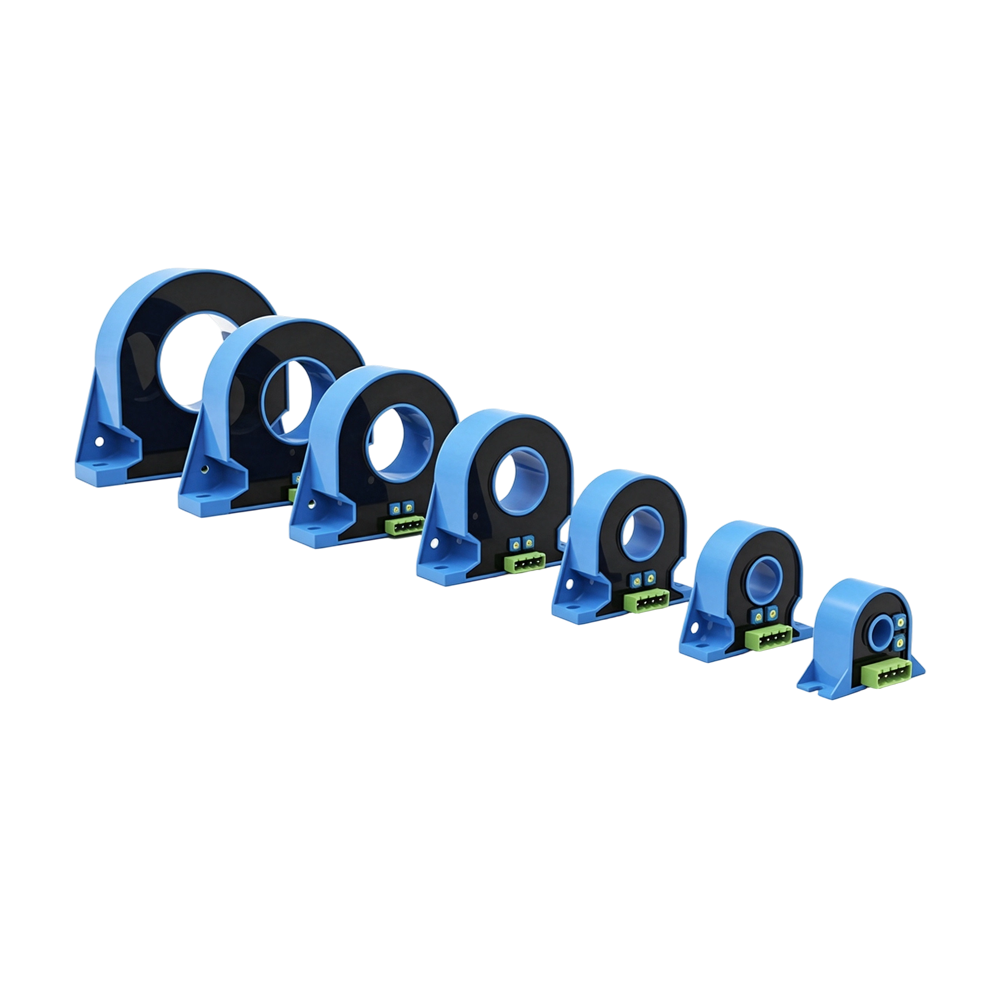
1. Current Transducer and Current Sensor Applications in Electricity Meters
A Current Transducer is a device that converts a measured electrical current into a corresponding output signal, such as a voltage or current signal, that can be processed by an electronic measurement system. In electricity meters, this signal provides important information about the current flowing through an electrical circuit.
Combined with voltage measurements and appropriate signal processing, current measurement enables an electricity meter to calculate power consumption, accumulated energy, and other electrical parameters. These measurements are important for accurate billing, energy management, and monitoring electrical loads.
A Current Sensor performs the core function of detecting electrical current. Depending on its operating principle, a current sensor may use a shunt resistor, a magnetic sensing element, a current transformer, or Hall effect technology. Each method offers different advantages in terms of accuracy, isolation, power consumption, response characteristics, and installation requirements.
Hall effect current sensors detect the magnetic field generated by current flowing through a conductor. This approach can support contactless current measurement and, in suitable designs, measure both AC and DC current. These characteristics make Hall effect technology useful in various electronic metering and power monitoring applications.
In a typical smart electricity meter, the current sensor provides a signal to the meter’s analog front end or measurement circuit. The electronic system processes this signal together with the voltage signal to determine the electrical parameters. The resulting information can be displayed on an LCD screen or transmitted through supported communication interfaces for remote monitoring and energy management.
One important advantage of an appropriately selected Current Transducer is its ability to provide a signal that matches the requirements of the meter’s electronic circuit. Engineers should evaluate the rated current, output range, sensitivity, linearity, response time, temperature characteristics, and isolation requirements before integrating a sensor.
Long-term stability is particularly important for electricity meters because they are expected to operate reliably over extended periods. Temperature changes, electromagnetic interference, installation conditions, and component tolerances can affect measurement performance. Proper circuit design, calibration, and testing help ensure that the complete metering system achieves its intended accuracy.
For electricity meter manufacturers, selecting a suitable Current Sensor is therefore an important step toward developing reliable energy measurement equipment with consistent performance and efficient integration.
2. Split Core Current Transducer and Hall Effect Current Measurement Technology
A Split Core Current Transducer is designed with a core that can open and close around an existing conductor. This structure allows technicians to install the device without disconnecting the conductor in applications where the equipment design and safety procedures permit it. Split-core solutions are particularly useful for retrofit projects, energy monitoring systems, and installations where replacing existing wiring would be inconvenient.
In electricity metering applications, a split-core device can help measure current in distribution panels, building energy management systems, and selected monitoring arrangements. Depending on its design, it may use a current transformer or a Hall effect sensing element. These technologies should be distinguished because their measurement capabilities and operating principles are different.
Conventional current transformers typically produce a secondary current proportional to the primary current and are generally used for AC measurement. Hall effect current transducers detect magnetic fields and can be designed to measure AC, DC, or both. The correct option depends on whether the application involves alternating current, direct current, or mixed current conditions.
A Split Core Current Transducer can reduce installation effort in suitable applications, but its performance depends on the core design, closure mechanism, conductor position, and installation quality. An improperly closed core or an unsuitable conductor arrangement may affect measurement accuracy. Manufacturers should follow the product specifications and installation instructions carefully.
Hall effect technology provides additional flexibility for electricity meter manufacturers. Because the sensing element detects a magnetic field rather than relying exclusively on a resistive voltage drop, certain Hall effect designs can offer electrical isolation and low insertion losses. However, the actual isolation rating, power consumption, and measurement performance depend on the specific product construction.
When evaluating a Hall effect Current Sensor, engineers should consider sensitivity, offset error, linearity, bandwidth, temperature drift, external magnetic field interference, and the output interface. The sensor’s output must also be compatible with the input range of the meter’s analog-to-digital converter or measurement IC.
For high-volume electricity meter production, repeatability and consistency between units are important. Manufacturers should assess product tolerances, calibration requirements, mechanical dimensions, and long-term availability. Testing under different load levels and environmental conditions helps verify that the selected sensing solution performs reliably in the intended application.
Whether a project requires a split-core installation or an integrated Hall effect sensing component, selecting the appropriate technology can simplify system integration and support dependable current monitoring.
3. Selecting a 150A 4V Hall Effect Current Transformer with 0.5 Accuracy
A 150A 4V Hall Effect Current Transformer is a product description that typically indicates a Hall effect current measurement device with a nominal current rating of 150 A and a voltage output of 4 V under a specified operating condition. Since product specifications vary by manufacturer, buyers should confirm whether 4 V represents the full-scale output, the output at rated current, or another defined measurement point.
For electricity meter manufacturers, the rated current should match the expected operating range of the application. A 150 A device may be appropriate for certain higher-current monitoring systems, but the nominal rating alone does not establish its suitability for every meter. Engineers must also evaluate the maximum measurable current, overload capability, output behavior, supply voltage, bandwidth, and isolation performance.
The 4 V output specification is equally important. The meter’s signal conditioning circuit must be able to accept the sensor output without exceeding its permitted input range. If the sensor produces a voltage signal that varies with measured current, the relationship between current and output voltage must be clearly documented. Offset voltage, sensitivity, and output limits should be considered during circuit design.
A 0.5 Accuracy Hall Effect Current Sensor indicates a stated accuracy class or accuracy specification of 0.5, but the exact meaning must be verified in the manufacturer’s datasheet. Buyers should confirm whether this means ±0.5% of reading, ±0.5% of full scale, or another defined error limit. These definitions can produce different measurement results, particularly at low current levels.
For electricity metering, sensor accuracy is only one part of the overall measurement system. The accuracy of voltage sensing, signal conditioning, the metering IC, calibration, and other components also affects the final energy measurement result. Therefore, a sensor advertised with 0.5 accuracy does not automatically mean that the complete electricity meter meets a particular metering accuracy class.
Before selecting a 150A 4V Hall Effect Current Transformer or a 0.5 Accuracy Hall Effect Current Sensor, manufacturers should request detailed technical documentation and verify the following specifications:
Rated current, measurement range, and overload capability.
Output voltage range, sensitivity, and reference conditions.
Accuracy definition, linearity, offset error, and temperature drift.
AC and DC measurement capability, where applicable.
Isolation rating, dielectric strength, and applicable safety requirements.
Operating temperature, mechanical dimensions, and installation method.
Prototype testing should include multiple current levels, temperature conditions, and representative operating environments. For electricity meters intended for regulated billing applications, the complete meter must be evaluated against the relevant metering standards and certification requirements.
In conclusion, Current Transducer, Split Core Current Transducer, and Current Sensor technologies provide important measurement capabilities for modern electricity meters. Hall effect solutions can offer flexible sensing options for applications requiring current monitoring, electrical isolation, or convenient integration. By carefully evaluating rated current, output specifications, accuracy definitions, and overall system performance, manufacturers can select suitable components for reliable electricity measurement, efficient energy management, and long-term product quality.
Post time: Oct-12-2026